
Ramadan is not only the month of fasting—it is the month of heartfelt prayers, tears of repentance, and sincere hope. Dua in Ramadan holds a special place in Islam because this sacred month softens hearts, strengthens faith, and opens the doors of Allah’s mercy wider than any other time of the year.
Allah’s Messenger (ﷺ) said, “When the month of Ramadan starts, the gates of Hell are closed and the devils are chained.” [ Sahih al-Bukhari 1899]
This Hadith clearly depicts how our good deeds are undeterred and peacefully practicable during Ramadan as the devils don’t get a chance to shake our Emaan, making us more pious and drawing us closer to the Almighty.
Many believers often ask: Why are duas more powerful in Ramadan? This blog answers that question using the Qur’an, Prophetic teachings, and scholarly insights, while guiding you on when and how to make the most meaningful supplications.
Why Dua in Ramadan Has a Special Status
Allah directly connects fasting with supplication in the Qur’an:
“When My servants ask you O Prophet about Me: I am truly near. I respond to one’s prayer when they call upon Me. So let them respond with obedience to Me and believe in Me, perhaps they will be guided to the Right Way.”
(Qur’an 2:186)
This verse appears in the middle of the verses about fasting, highlighting the close relationship between supplications during fasting and divine acceptance.
Key Reasons Why Duas Are More Powerful in Ramadan
- Hearts are more humble and focused.
- Sins are forgiven, and mercy is multiplied.
- Shayṭān is restrained, reducing distractions.
- Acts of worship increase spiritual sensitivity.
These factors strengthen the spiritual connection with Allah, making prayers more sincere and impactful.
Accepted-Dua in Ramadan: What the Prophet ﷺ Taught
The Messenger of Allah ﷺ said:
“There are three whose supplication is not rejected: The fasting person when he breaks his fast, the just leader, and the supplication of the oppressed person; Allah raises it up above the clouds and opens the gates of heaven to it. And the Lord says: ‘By My might, I shall surely aid you, even if it should be after a while.’”
(Jami` at-Tirmidhi 3598)
This hadith confirms the reality of accepted dua in Ramadan, especially for those who fast with sincerity and dedication to please Allah. Fasting is a sacrifice that we observe only to please Allah. One mustn’t forget that we need Allah but He (The Almighty) doesn’t need us.

Important Times When Dua Is Accepted
Understanding times when dua is accepted helps believers maximize their prayers:
- During fasting hours
- Dua after iftar (at the moment of breaking the fast)
- In the last third of the night
- Night prayers in Ramadan (Tarawih and Tahajjud)
- Dua during Laylat al-Qadr
Laylat al-Qadr: The Night of Limitless Duas
Allah says in the Holy Qur’an:
“The night of glory (Laylat al-Qadr) is better than a thousand months.”
(Qur’an 97:3)
On this night, a single sincere prayer can outweigh decades of worship. Our prophet (ﷺ) said, “Whoever fasted the month of Ramadan out of sincere Faith (i.e. belief) and hoping for a reward from Allah, then all his past sins will be forgiven, and whoever stood for the prayers in the night of Qadr out of sincere Faith and hoping for a reward from Allah, then all his previous sins will be forgiven .” [Sahih al-Bukhari 2014]
The question is: When is lailatal qadr? How do we search for it? What are the signs of the blessed night as per Quran and Hadith? That is also solved by our beloved prophet who had given us clear signs. He (ﷺ) said, “Search for the Night of Qadr in the odd nights of the last ten days of Ramadan.” [Sahih al-Bukhari 2017]
In another narration, With the start of the last ten days of Ramadan, the Prophet (ﷺ) used to tighten his waist belt (i.e. work hard) and used to pray all the night, and used to keep his family awake for the prayers. [Sahih al-Bukhari 2024]
A powerful Ramadan dua for forgiveness taught by the Prophet ﷺ is:

Scholarly Insights on the Power of Prayer in Islam
Imam Ibn Rajab رحمه الله explained that fasting suppresses desires, allowing the soul to turn fully toward Allah—this is why the power of prayer in Islam is heightened during Ramadan.
Imam Al-Ghazali also emphasized that hunger refines the heart, making supplications more sincere and less worldly.
Mufti Ismail Menk in one of his lectures telling us the importance of prayer (Dua) has given us points with Core Teachings:
- Guidance is the Most Important Dua – Must be repeated in every prayer
- Humility in Supplication – Complete reliance on Allah
- Combine Gratitude with Requests – Thank Allah before asking
- Pray for the Whole Ummah – Not just personal needs
- Trust Allah’s Timing – Sometimes the answer is “no” for your benefit
- Action + Dua – Make dua while also taking action
- The Prophet’s Example – Even the best creation was humble in prayer
- Dua is Part of Qadr – Allah knows you will make dua
- Seek Guidance from All Sources – Use doctors, experts, but ask Allah to guide them
- Dua is Worship – One of the highest forms of devotion to Allah
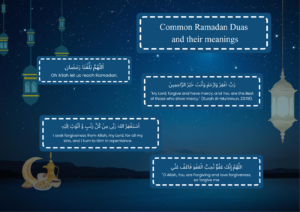
What Duas Should Muslims Recite in Ramadan?
If you wonder, What duas should Muslims recite in Ramadan?, focus on simplicity and sincerity:
- Forgiveness and repentance
- Guidance and steadfast faith
- Protection for family and community
- Relief for the oppressed
- Jannah and protection from Hellfire
Final Reflection
Ultimately, Fasting teaches us to do what Allah wants us to do. Ramadan is a great opportunity for Believers to show our readiness to submit to the commands of Allah and make His will foremost in our lives. Simultaneously, doing without food and drink allows us to acknowledge their importance in our lives, and to see what a debt of gratitude we owe to Allah for being the Provider.
Dua in Ramadan is not about long words—it is about honest hearts. This sacred month invites believers to ask, hope, and trust fully in Allah’s response. Whether whispered in the quiet of the night or spoken at iftar, every sincere prayer is heard.
When is the best time to make dua?
The best moments include while fasting, at iftar, during night prayers, and especially on Laylat al-Qadr.
When is the best time to make dua while fasting?
The final moments before iftar are among the most accepted times for supplication.
What are the recommended duas in Ramadan?
Du‘as for forgiveness, mercy, guidance, and acceptance of deeds are highly encouraged.