ChatGPT
 Grok
Grok
 Perplexity AI
 Claude


Forgiving nature is one of the most beautiful qualities a believer can develop. In a world where misunderstandings, anger, and hurt are common, Islam teaches us to rise above resentment and choose mercy. Forgiveness in Islam is not a sign of weakness—it is a reflection of strength, faith, and trust in Allah’s justice.
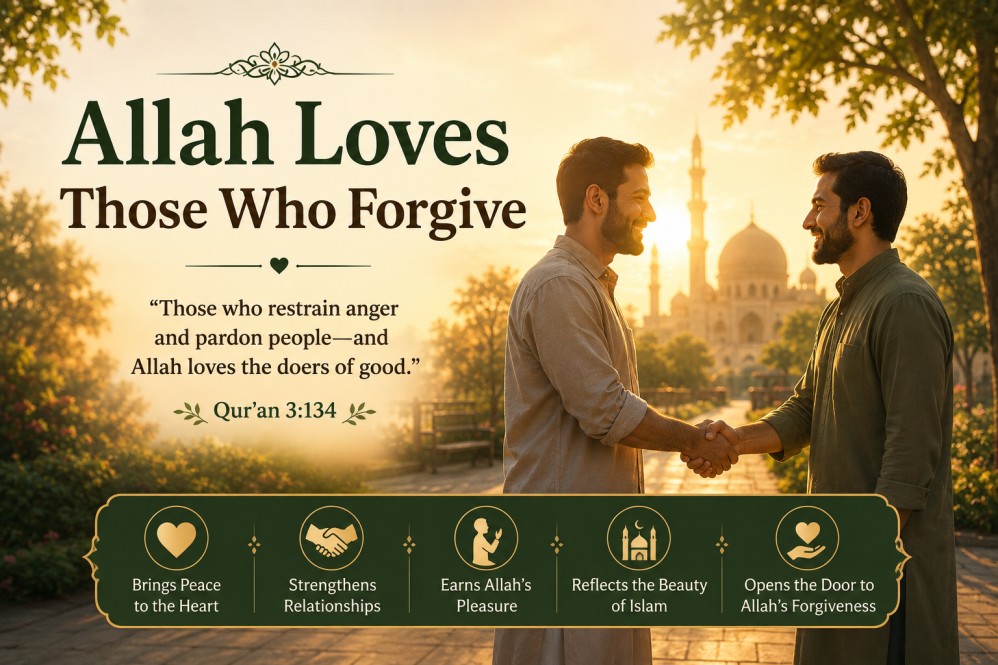
The Qur’an and the Sunnah repeatedly remind us that just like we expect Allah’s mercy, we should also extend mercy to others. Remember that forgiveness brings peace to the heart, strengthen relationships, and earn Allah’s pleasure.
Quran Verses About Forgiveness
Controlling anger and forgiving others are two qualities that are related to each other. In the moments of anger we lose control over ourselves. We might say or do things that will be regretful later. By controlling our anger, we can think clearly and reasonably.
Those who donate in prosperity and adversity, control their anger, and pardon others. And Allah loves the good-doers.
[Quran 3:134]
From this verse, we learn two very important things. One is to spend money in the way of Allah. The other is to control our anger and forgive others.
Muhammed advised us not to lose our tempers, saying that if we become really angry we The Prophet Muhammad ﷺ also taught us a practical way to control anger. He ﷺ said, “If any of you becomes angry while standing, let him sit down. If the anger leaves him, well and good; otherwise, let him lie down.” (Sunan Abi Dawud 4782)
This guidance shows us the importance of stepping away from anger before it leads to words or actions that we may later regret. should sit down. If we cannot control ourselves even then, we must lie down.
Importance Of Forgiveness In Islam
Forgiveness is a very important virtue in Islam. Instead of choosing revenge if we choose to forgive. Allah is pleased with us. Adding to that forgiveness will inculcate a good feeling in the heart of the person we forgive, he may become a friend. However, we do not have to forgive someone if we don’t want to. It is our right to retaliate but it is our privilege to forgive.
The reward of an evil deed is its equivalent. But whoever pardons and seeks reconciliation, then their reward is with Allah. He certainly does not like the wrongdoers.
[Quran 42:40]
When taking retaliation one should not take the law into his own hands. Taking law into hands would result in bloodshed and further injustice. Forgiveness instead of retaliation is a good act, especially in the case of one’s own family. When some of our family members show hatred, misbehave or portray enmity towards us. The Quran advises us to show special kindness:
O believers! Indeed, some of your spouses and children are enemies to you, so beware of them. But if you pardon, overlook, and forgive their faults, then Allah is truly All-Forgiving, Most Merciful.
[Quran 64:14]

Allah Loves Those Who Forgive Others
One of the clearest Quran verses about forgiveness highlights the reward for those who overlook the faults of others.
Allah says:
“…Let them pardon and forgive. Do you not love to be forgiven by Allah? And Allah is All-Forgiving, Most Merciful.”
[Quran 24:22]
Allah says:
“And whoever does a wrong or wrongs himself but then seeks forgiveness of Allah will find Allah Forgiving and Merciful.”
(Qur’an 4:110)
This verse beautifully summarizes forgiveness in the Quran, assuring every believer that Allah’s mercy is always within reach.
Forgiving Others In Islam
Occasionally, we may unintentionally hurt someone’s feelings. If we know that we are at fault we should quickly repent and seek forgiveness from Allah and the person we have offended.
Knowing that we all are capable of making mistakes, we should always try to keep a generous and forgiving heart. If someone shows sincere repentance and asks for our forgiveness, we should forgive him. We should not try to make him feel guilty and desert him as punishment for his mistake.
Islamic Teachings On Forgiveness
Rasulullah ﷺ said,
It is not permissible for a Muslim to have estranged relations with his brother beyond three nights, the one turning one way and the other turning the other way when they meet; the better of the two is one who is the first to give a greeting.
[Sahih Muslim 2560a]
All punishment and reward comes from Allah. Only Allah can judge what is in people’s hearts. Therefore, we must learn to give people the benefit of doubt.
We should also try to persuade other people to forgive one another and live in peace. This is a great reward for those who strive for peace and preserve the Muslim brotherhood.
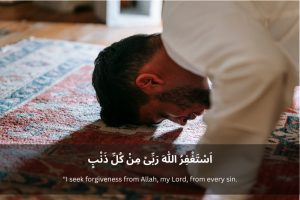
Allah says about forgiveness in the Quran:
The believers are but one brotherhood, so make peace between your brothers. And be mindful of Allah so you may be shown mercy.
[Quran 49:10]
Peace and forgiveness are essential for the success of humanity. Allah loves those who are gentle and peaceful. Allah does not like those who cause trouble for the people.
Hadith On Forgiveness
No one demonstrated mercy better than our beloved Prophet Muhammad ﷺ.
Abu Hurairah (RA) reported that the Messenger of Allah ﷺ said:
“Charity does not decrease wealth, no one forgives another except that Allah increases his honor, and no one humbles himself for the sake of Allah except that Allah raises his status. “
(Sahih Muslim 2588)
This authentic hadith on forgiveness teaches that forgiving someone never diminishes a person’s dignity. Instead, Allah elevates their honor.
Rasulullah ﷺ is reported to have said:
“Be merciful on the earth, and you will be shown mercy from Who is above the heavens.” [Jami` at-Tirmidhi 1924]
The Prophet ﷺ forgave even those who had harmed him severely. His life remains the greatest practical example of compassion and mercy.
How to Seek Forgiveness from Allah
While forgiving others is important, every believer should also know how to seek forgiveness from Allah sincerely.
Some practical ways include:

Benefits of Forgiveness in Islam
The Benefits of forgiveness in Islam extend beyond spiritual rewards.
When we forgive:
- Our hearts become lighter.
- Relationships improve.
- Anger and resentment decrease.
- We gain inner peace.
- We earn Allah’s mercy.
- As we gain Allah’s mercy our prayers are more likely to be answered.
Perhaps the greatest blessing is that forgiving others reminds us of our own need for Allah’s forgiveness in Islam. Every believer hopes that Allah will overlook their shortcomings on the Day of Judgment.
Conclusion
Forgiveness in Islam is more than simply saying “I forgive you.” It is a path toward spiritual growth, emotional healing, and closeness to Allah. The Qur’an repeatedly reminds us that Allah is most forgiving, and the Prophet ﷺ showed us how mercy transforms lives.
Whenever we forgive others for Allah’s sake, we reflect one of the qualities beloved to our Creator and that of our Prophet Muhammad ﷺ. Likewise, whenever we sincerely seek His forgiveness, we find His doors of mercy always open.
May Allah make us among those who forgive, seek forgiveness often, and receive His endless mercy. Ameen.
Which are the most important Quran verses about forgiveness?
Some key verses include Qur'an 39:53, 3:134, 24:22, and 4:110, all of which emphasize Allah's mercy and the virtue of forgiving others.
Is forgiveness in Islam mandatory?
Forgiveness is strongly encouraged, especially when it brings peace and removes pride. In many situations, Islam praises forgiving others over seeking revenge.
What does the Quran say about forgiveness?
The Quran teaches believers to pardon, overlook, and forgive others so that Allah may forgive them too.
How can I seek Allah's forgiveness daily?
Regularly say Astaghfirullah, make sincere repentance, pray consistently, avoid repeating sins, and increase good deeds.
Why does Allah love those who forgive?
Because forgiveness reflects mercy, patience, humility, and trust in Allah's justice—all qualities encouraged throughout the Qur'an and Sunnah.
What is the reward of forgiving others in Islam?
Forgiving others in islam brings spiritual peace, Allah’s pleasure, and honor in this world and the next.