
In a world often divided by ethnicity, ideology, caste, or nationality, the concept of Islam and diversity offers a powerful corrective rooted in Divine guidance. This blog explores how the teachings of the Qur’an, the Prophetic model, and Islamic tradition promote unity in Islam, support multicultural Islam, and demonstrate Islam inclusiveness. It also touches on related themes like Islam and equality in view of the Quran and Hadith, formation of the global Muslim community, how unity in faith moulds the believer’s heart, and encourages tolerance in Islam.
Core Concept
Today’s world is more interconnected than ever. Yet, ironically, we see rising divisions—among religions, ethnicities, socio-economic classes, and political ideologies. In such a fragmented landscape, religion can either deepen divides or heal them.
Tahdhib and Akhlaq are prime important characteristics that can be seen in any Muslim. Tahdhib and Akhlaq can be used interchangeably as both denote morals and manners. Tahdhib is derived from the Arabic term hadhaba, which means to train, cleanse or improve someone.Honesty, kindness, helpfulness, modesty, truthfulness are all examples of morals. Akhlaq is derived from the Arabic term Khalaqa, which means to create, shape, and mold. Thus naturally good temper, noble character and good manners cover it all.
The environment can make someone good or bad. The Quran and Hadith (the Sunnah) teach us good morals and manners. Good moral behaviour is the basic foundation of a successful Muslim. Upholding the Islamic brotherhood is a moral obligation for every Muslim and important part of one’s faith.The Prophet (peace and blessings of Allah be upon him) said:
“None of you [truly] believes until he loves for his brother that which he loves for himself.” [Al-Bukhari] [Muslim]
Foundations from the Qur’an
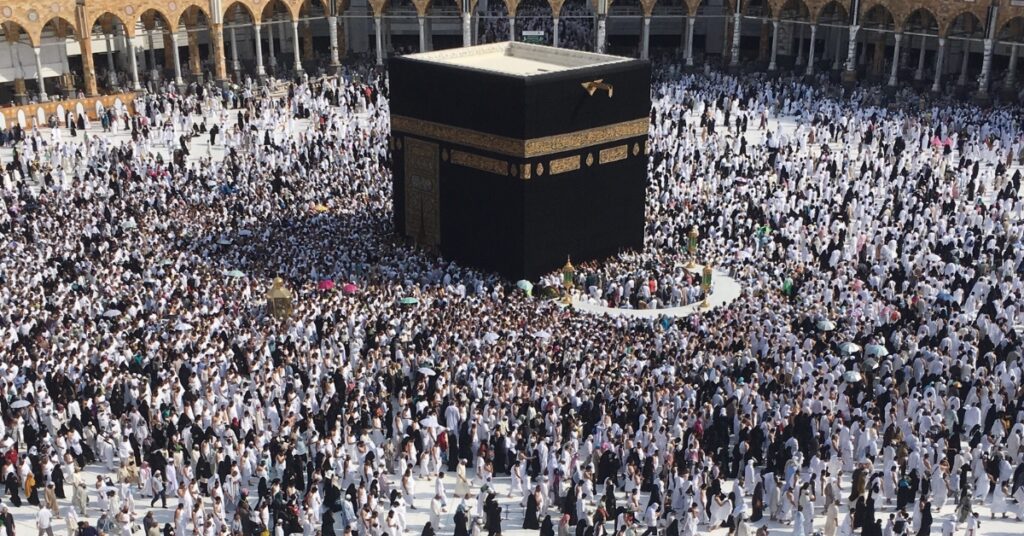
The Qur’an contains numerous verses that frame diversity as part of the Divine design, and unity as an ethical obligation among believers.Islam is truly the universal faith. One can find Muslim of all nationalities, living across every corner of the globe. They include Arabs, Iranians, Indians, Pakistanis, Malays, Indonesians, Chinese, Turks, Africans, Bosnians, Americans and many others.
The common bond of Islam makes Muslims of all races and tribes as brothers and sisters. They are supposed to help and love one another. Allah has said in the Qur’an,
“The believers are but one brotherhood, so make peace between your brothers. And be mindful of Allah so you may be shown mercy.” (Quran 19:10)
Interestingly, every war in world history has been fought over nationalism and territorialism. The belief that one nation’s people are more superior than another is a man-made notion. Allah clearly rejects any such partitions among his creation. And the Almighty says,
“O humanity! Indeed, We created you from a male and a female, and made you into peoples and tribes so that you may ˹get to˺ know one another. Surely the most noble of you in the sight of Allah is the most righteous among you. Allah is truly All-Knowing, All-Aware.” (Quran 49:13)
This verse reminds us that diversity of race, tribe, or nationality is not accidental—but deliberate—and the test is not our background but our piety and conduct.
“And cooperate in righteousness and piety, but do not cooperate in sin and aggression.” (Qur’an 5:2)
This is a Qur’anic principle calling for moral cooperation across lines of difference, within the ummah and even beyond.
“The believers are nothing else than brothers. Therefore make peace between your brethren.” (Qur’an 49:10)
Brotherhood (ukhuwah) is at the heart of unity in Islam.
“Invite all to the Way of your Lord with wisdom and kind advice, and only debate with them in the best manner. Surely your Lord alone knows best who has strayed from His Way and who is ˹rightly˺ guided.” (Qur’an 16:125) supports the use of “wisdom and good instruction” in inviting others, reflecting tolerance in Islam and civil dialogue.
These verses show that diversity is not to be feared or suppressed. Instead, believers are encouraged to see diversity as an opportunity—to know one another, to cooperate for righteousness, to build bonds of brotherhood, and to maintain justice across differences.
Prophetic Teachings & the Ethos of Islamic Inclusiveness
The Prophet Muhammad ﷺ modeled many of these ideals throughout his life.Allah’s Messenger (ﷺ) said,
“You see the believers as regards their being merciful among themselves and showing love among themselves and being kind, resembling one body, so that, if any part of the body is not well then the whole body shares the sleeplessness (insomnia) and fever with it.” [Sahih al-Bukhari 6011]
This emphasizes solidarity: when one believer suffers, the rest feel it too. That is unity in faith in practice.
The Prophet ﷺ in his last sermon said:
“All mankind is from Adam and Eve. An Arab has no superiority over a non-Arab nor a non-Arab has any superiority over an Arab; a white has no superiority over a black nor a black has any superiority over a white — except by piety and good action.”
This is a clear teaching of Islam and equality—showing that racial or ethnic privilege has no place in the Islamic moral order.
The Prophet encouraged gentle dialogue, fair treatment of non-Muslims, and tolerant interaction—reinforcing Islam inclusiveness even outside the Muslim community.A Muslim should treat other Muslims as his brothers and sisters, caring about the welfare as he would do it for his own family. The relationship is built with trust, love, respect,and companionship. Muslims should live together in peace, sharing their joys and their sorrows. Rasulullah (ﷺ) said,
“A Muslim is a brother of another Muslim, so he should not oppress him, nor should he hand him over to an oppressor. Whoever fulfilled the needs of his brother, Allah will fulfill his needs; whoever brought his (Muslim) brother out of a discomfort, Allah will bring him out of the discomforts of the Day of Resurrection, and whoever screened a Muslim, Allah will screen him on the Day of Resurrection .” [Sahih al-Bukhari 2442]
Together, the Qur’an and Sunnah form the ethical foundation for multicultural Islam and unity among believers.
Islam and Diversity in Practice: Unity through Inclusion
How does the ideal of Islam and diversity translate into real-world living? Below are some practical and conceptual dimensions:
- Unity in Islam despite different cultures
Across the world, Muslims belong to diverse ethnicities, speak various languages, follow different scholarly schools, and have cultural customs. Yet the core rituals—Shahadah, Salah, fasting, Zakah, Hajj—bind them together. The diversity becomes a richness rather than a barrier among the followers. - Multicultural Islam in communities
In many cities, mosques are multi-ethnic. Sermons are delivered in multiple languages. Eid gatherings receive people from different nationalities. This is multicultural Islam lived out. They embrace diverse cultural differences without any second thought. - Inclusiveness in social justice
Principles of zakāh / sadaqah, caring for orphans and refugees, supporting interfaith dialogue—all reflect Islam inclusiveness in action. When Muslims help those in need regardless of their background, they enact the Qur’ānic call to righteousness and cooperation. Thus, proving that Islam strongly believes in brotherhood. - Global Muslim community (Ummah)
The ummah cuts across geography, race, and politics. Whether in Africa, Southeast Asia, Europe or America, Muslims are connected spiritually and morally. The idea of the global Muslim community encourages empathy, support, and solidarity even when local cultures differ. This unity not only strengthens their bonds but acts as a shield against all the evil doers, who try to use these differences as a weapon to make these Muslims hold each other’s collars. - Tolerance in Islam toward non-Muslims
Verses like “Allah does not forbid you from dealing kindly and fairly with those who have neither fought nor driven you out of your homes. Surely Allah loves those who are fair. Allah only forbids you from befriending those who have fought you for ˹your˺ faith, driven you out of your homes, or supported ˹others˺ in doing so. And whoever takes them as friends, then it is they who are the ˹true˺ wrongdoers.” (Qur’an 60:8–9) affirm that kindness and justice towards non-Muslims who do not wage war against Muslims is part of Islamic teaching. This reinforces the idea that tolerance is not a modern import but rooted in scripture. - Promoting dialogue and mutual understanding
The concept of li-ta’arafu (“so that you may know one another”) in Qur’an 49:13 encourages believers to engage with diversity—not to ignore it. It is an invitation to learn, understand, and build bridges.The only difference Allah sees between us is the purity of our faith and actions.
Challenges & Opportunities
While Islam gives strong theological and ethical support for unity amidst diversity, implementing that ideal faces challenges:
- Cultural or ethnic prejudice persists even within Muslim-majority societies.
- Solidarity and conflict have divided communities that should otherwise be united under faith.
- Political conflicts often override religious brotherhood and the impact is worse.
- Migration and globalization bring new social dynamics and tensions between traditional cultural norms and global multicultural settings.
But there are also huge opportunities:
- Interfaith & intra-faith dialogue platforms.
- Educational curricula that emphasise tolerance, equality, and shared humanity.
- Social media & global networks connecting Muslims worldwide.
- Youth-led initiatives that embrace multiculturalism while rooted in Islamic identity.
- Podcasts with great scholars who emphasize the importance of unity among Muslims also have a great positive influence.
By leveraging the principles of unity in faith and Islam inclusiveness, these opportunities can help heal fractures in our societies.
Conclusion
Islam and diversity is not a mere slogan: it is deeply embedded in the Qur’an and the life of the Prophet ﷺ. It calls Muslims to rise above narrow identities, to embrace others with kindness, to uphold justice across differences, and to see unity not as uniformity—but as harmony in diversity.
The strength of the Ummah sticks to their unity. Satan knows that there is strength in numbers. So he tries to the maximum to create barriers among Muslims. Thus, conquering their hearts and souls. We must be reluctant and avoid the tendency to group together based on racial lines against each other, because that would be our downfall. Allah warns us in the Holy Qur’an:
“And hold firmly together to the rope of Allah and do not be divided. Remember Allah’s favour upon you when you were enemies, then He united your hearts, so you—by His grace—became brothers. And you were at the brink of a fiery pit and He saved you from it. This is how Allah makes His revelations clear to you, so that you may be ˹rightly˺ guided.” (Quran 3:103)
We must remember that despite all the differences we are Muslims and we share common faith in Allah and his teachings. There should be no other bond stronger than this and no other brotherhood can be more fulfilling than this.
When we live by unity, celebrate multicultural Islam, and practise inclusiveness, we become faithful to both the letter and spirit of Islam—and contribute to healing divisions in a fractured world.