ChatGPT
 Grok
Grok
 Perplexity AI
 Claude

Most people grow up hearing the word faith. In prayers, in conversations, in moments of uncertainty it shows up everywhere. But very few stop to ask what it actually means on a personal level. What does faith mean beyond a religious concept? And more importantly, how does it change the way you live, think, and move through difficulty?
Understanding the meaning of faith is not just a spiritual exercise. It is one of the most practical things a person can do.
What Is the True Meaning of Faith?
At its core, faith is trust. It is the deep, settled belief that something greater than what you can currently see is at work in your life. The meaning of faith goes beyond blind optimism or wishful thinking, it is an active conviction that shapes how you respond to both good days and bad ones.
Faith can be rooted in God, in a set of values, or in a larger purpose. But in every form, it shares a common thread: it anchors you when life feels uncertain.
What does faith mean in practical terms? It means continuing to move forward even when the outcome is unclear. It means choosing patience over panic, hope over despair, and trust over fear. Faith is not the absence of doubt it is choosing to act despite it.
Why Is Faith Important in Everyday Life?
The importance of faith in life becomes most visible in the ordinary moments, not just the dramatic ones. Faith in daily life is what helps a person wake up with purpose on a hard morning, stay calm in a difficult conversation, or keep working toward a goal that has not yet shown results.
Why faith is important is a question worth sitting with. Without it, life can feel reactive driven entirely by circumstances rather than conviction. Faith gives you a framework. It tells you that your struggles have meaning, that your efforts are not wasted, and that you are not simply drifting from one event to the next.
How faith affects your life shows up in small but consistent ways. People with strong faith tend to make more intentional decisions, maintain longer-term thinking, and recover more quickly from setbacks not because life is easier for them, but because they have something steady to return to.
What Does It Mean to Live by Faith?
What does it mean to live by faith is a question that moves faith from concept to practice. Living a life of faith means allowing your beliefs to shape your daily choices, not just your Sunday mornings or moments of crisis.
Faith as a way of life means you approach relationships with more patience, work with more integrity, and hardship with more steadiness. It is not a performance. It is an internal orientation that gradually changes how you see everything around you.
Faith and purpose are deeply connected here. When you live by faith, you stop searching for meaning only in outcomes. You begin to find it in the process itself in showing up, in serving others, in doing the right thing even when no one is watching. That kind of purpose does not depend on results. It is self-sustaining.
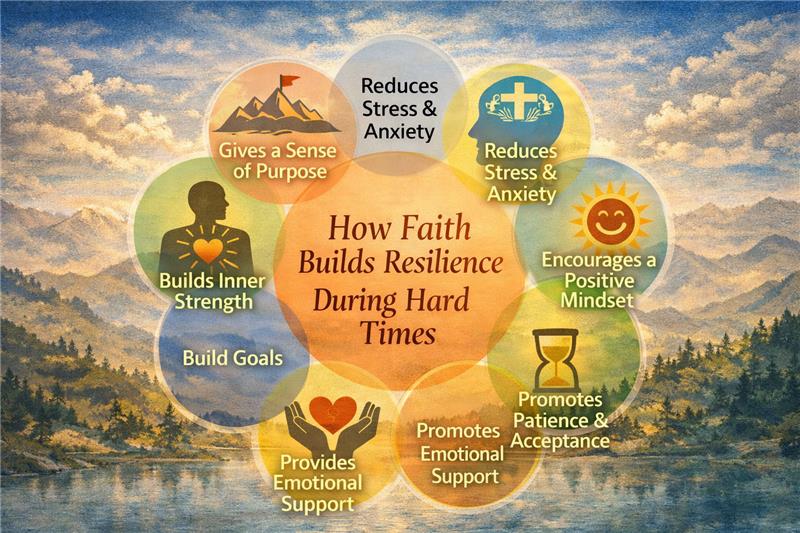
How Does Faith Build Resilience During Hard Times?
Faith plays a powerful role in helping people stay strong during difficult times. It provides comfort, hope, and a sense of direction when life feels uncertain. By trusting in something greater, individuals can better cope with challenges and bounce back from setbacks.
Gives a sense of purpose
- Faith helps you see meaning in difficult situations, making challenges feel more manageable.
Reduces stress and anxiety
- Believing that things will improve brings calmness and emotional stability.
Builds inner strength
- Faith encourages you to stay strong and keep going, even when things feel overwhelming.
Encourages a positive mindset
- It helps you focus on hope instead of fear or negativity.
Provides emotional support
- Faith often connects you to a community or belief system that offers comfort and encouragement.
Promotes patience and acceptance
- It teaches you to trust the process and accept things you cannot control.
How Does Faith Drive Personal Growth Over Time?
Faith and personal growth are inseparable. Growth requires change, and change is uncomfortable. What faith does is make that discomfort bearable. It gives you a reason to keep growing even when it is easier to stay where you are.
Living a life of faith means you are never truly finished. There is always more to learn, more to let go of, and more to become. Faith keeps that process moving by grounding it in something larger than personal ambition.
The importance of faith in life is ultimately that it connects your daily actions to a deeper story. It reminds you that you are part of something that matters, and that how you live, right now, is worth getting right.
Does Trust in Allah Give Life Meaning Beyond Pain and Hardship?
Trust in Allah gives life a deeper meaning by helping believers see beyond pain and hardship. It teaches that challenges are part of a greater plan and not without purpose. This belief brings comfort, patience, and hope during difficult times. By relying on Allah, individuals feel guided and supported, knowing that every struggle carries wisdom and that better outcomes can come with faith and perseverance.
|
“But whosoever turns away from My Reminder [i.e. neither believes in this Qur’an nor acts on its orders, etc.] verily, for him is a life of hardship.” (Qur’an 20:124) |
Final Thoughts
Faith is not reserved for religious texts or Sunday sermons. It is a living, breathing part of how you navigate every day. When you understand the meaning of faith and let it shape your choices, relationships, and response to hardship, you stop simply surviving your life and start living it with real intention and depth.
How does faith influence decision-making?
Faith helps people make choices with clarity, patience, and long-term perspective rather than reacting emotionally.
Is faith important during success as well as hardship?
Yes, faith keeps individuals grounded during success and helps maintain humility and gratitude.
Can faith change over time?
Faith can grow stronger or evolve based on life experiences, challenges, and personal reflection.
How can someone strengthen their faith daily?
Practices like reflection, prayer, positive thinking, and staying connected to supportive communities can strengthen faith.