ChatGPT
 Grok
Grok
 Perplexity AI
 Claude

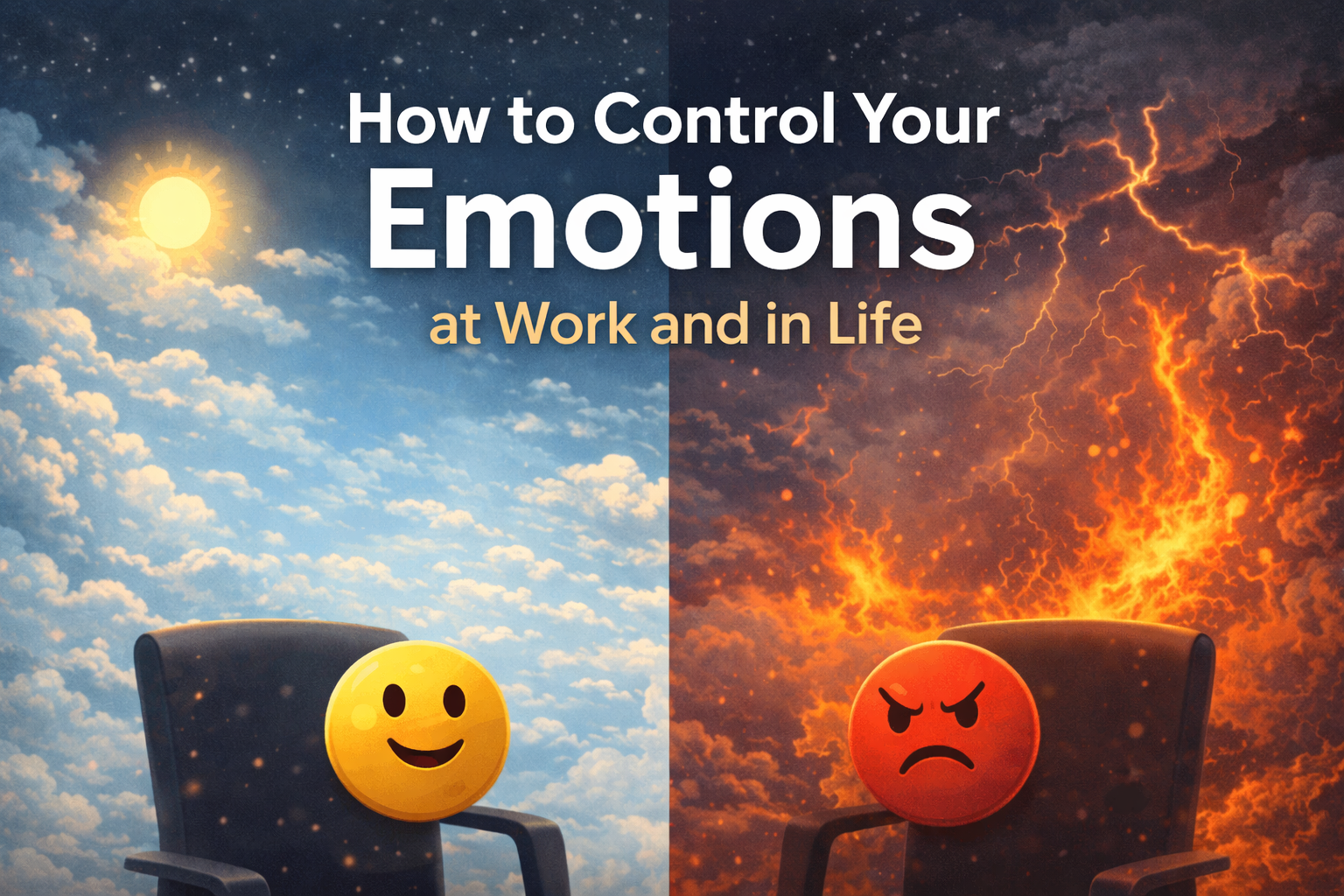
You are in the middle of a meeting that is anxiety-provoking, and someone makes a comment that hits a nerve. Your heart is racing, your jaw is clenched, and before you know it, you have overreacted to the situation.
While we were never taught how to manage emotions effectively, we were taught how to suppress our emotions, how to blow up, or how to alternate between both. Emotional regulation is not about controlling your emotions; it’s about understanding your emotions, the reason behind your emotions, and how you choose to react to your emotions.
Whether it’s managing a deadline or managing an issue in your relationship, learning how to effectively manage your emotions can literally change your life.
Why Is Understanding Your Emotional Triggers the First Step to Emotional Control?
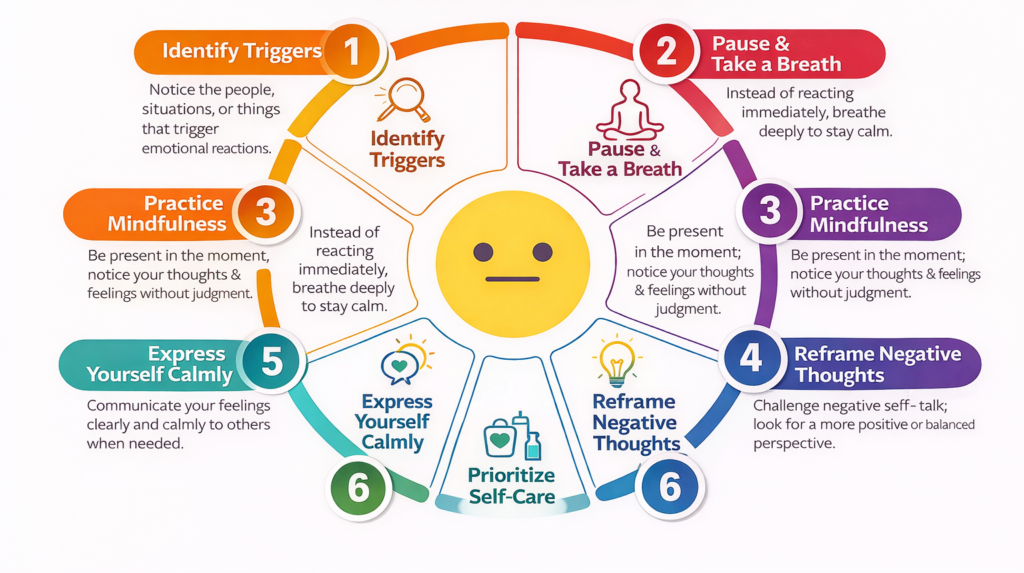
The first step in how to control your emotions is awareness specifically, understanding your emotional triggers.
Emotional triggers are any situation, word, or event that elicits a strong emotional response. It may be a comment made by a manager that one feels is dismissive, a comment made by another person that interrupts one’s own comment in a meeting, or a sense of not being valued after months of hard work.
Most people react to triggers automatically. But when you start noticing your patterns “I always shut down when I’m criticised publicly” you gain the power to pause before reacting.
One of the most underrated emotional management strategies is slowing down. Just as living in the present moment helps you detach from anxious thoughts, it also trains your mind to observe emotions without being consumed by them.
Try this: Journal for five minutes at the end of each day about what made you feel emotionally charged. Over time, patterns become clear.
How Can Mindfulness for Emotional Control Help You Stay Calm at Work?
Mindfulness for emotional balance is one of the most effective tools available and you don’t need an hour of meditation. Small, intentional pauses work just as well.
When emotions rise under pressure, try the STOP method:
- Stop what you’re doing
- Take a breath
- Observe what you’re feeling without judgment
- Proceed with intention
There is space between stimulus and response; it is in this space that your power to choose lies. By understanding emotional triggers, remaining calm in challenging situations becomes much easier when you cultivate mindfulness as a daily habit.
Similar to how mindfulness in savoring the moment and finding joy in life requires slowing down and being in the moment, mindfulness in controlling your emotions requires slowing down and being in the moment. Even taking three deep breaths before an emotionally challenging meeting can be incredibly powerful.
What Are the Most Effective Emotional Regulation Techniques You Can Use Every Day?
Knowing you should stay calm is one thing. Having real tools is another. Here are practical emotional regulation techniques to start today:
- Box breathing: Breathe in for 4, hold for 4, breathe out for 4, hold for 4. One of the best ways to stay calm in high-pressure situations immediately.
- Name it to tame it: Naming your emotion, “I feel frustrated,” scientifically decreases the strength of that emotion in your brain.
- The 10-second rule: Before reacting when you’re angry, wait 10 seconds. This is how you can control anger and stress in real-time.
- Body scan: Notice your body’s physical reactions, such as tension in your chest, shoulders, or jaw. This is how you can control anger and stress in real-time.
- 5-4-3-2-1 grounding: Name 5 things you see, 4 things you feel, 3 things you hear, 2 things you smell, and 1 thing you taste. This technique brings you back to reality in an instant.
These coping strategies for emotions don’t require perfection, just consistent practice.
How to Improve Emotional Intelligence in Your Work and Relationships?
Emotional intelligence (EI) is your ability to recognise, understand, and manage your emotions and respond thoughtfully to others. People with high EI communicate clearly, handle conflict without escalating, and make better decisions under pressure.
Here’s how to build it:
- Practice Empathy: Ask yourself, “What might this person be going through right now?”
- Take a pause before sending: Write the angry email. Wait one hour before sending it.
- Own Your Reactions: Emotional maturity means taking ownership of your reactions even if you didn’t contribute to the reason for the reaction.
One of the foundational pillars of emotional strength is patience. Learning to wait before reacting allows you to develop the emotional intelligence that leads to success in every aspect of your life.
How Do You Stay Emotionally Stable When Life Feels Completely Overwhelming?
Some seasons bring pressure from every direction work, home, and everything in between. Here’s how to control emotions without losing yourself:
- Protect your energy: Not all situations require your reaction.
- Develop a solid routine: Sleep, exercise, and eating establish emotional stability.
- Talk to someone: Solitude intensifies emotions. Connection normalizes them.
- Know what you can’t control: Acceptance is not approval. It’s understanding to respond accordingly.
The act of smiling and consciously spreading positivity can interrupt a negative emotional loop more quickly than you’d expect. Small positive shifts build real resilience over time.
Staying calm in stressful situations isn’t about being happy all the time. It’s about building enough inner steadiness that life’s storms don’t knock you completely off balance.
How Does Islam Teach Us to Control Our Emotions?
In Islam, controlling one’s emotions is a characteristic of strong faith and trust in Allah. Human feelings of joy and sorrow are a part of life, but it is advised that one should deal with them in a patient and grateful manner. Ups and downs of life are a test for individuals, and dealing with them in a balanced manner helps in developing one’s character and understanding. By controlling one’s emotions and thinking before reacting, one can maintain a balanced state of mind and avoid extremes in behavior, leading to peace of mind, strength, and wisdom in dealing with all situations of life.
“In order that you may not be sad over matters that you fail to get, nor rejoice because of that which has been given to you.” (Qur’an 57:23)
Conclusion
The process of emotional management is a continuous process, not a one-time event. Begin with small steps, recognize what makes you emotional, take a deep breath before reacting, and use to know how to stay calm and management skills that work best for you.
Good emotional management is not about not being emotional; it’s about being someone who interacts with the world in a state of clarity, purpose, and peace of mind. And this someone is just a breath away.
How does journaling help in managing emotions?
Journaling helps identify emotional patterns and triggers, making it easier to understand reactions and improve emotional responses over time.
What role does physical health play in emotional stability?
Good sleep, regular exercise, and a balanced diet support brain function and help regulate mood, improving emotional stability.
Is it healthy to suppress emotions instead of expressing them?
No, suppressing emotions can lead to stress and burnout. It’s healthier to understand and express emotions in a controlled and constructive way.
How can small daily habits improve emotional resilience?
Simple habits like deep breathing, taking pauses, and practicing gratitude can gradually strengthen emotional resilience and reduce stress.