Introduction: Why Eating Etiquette Matters in Islam
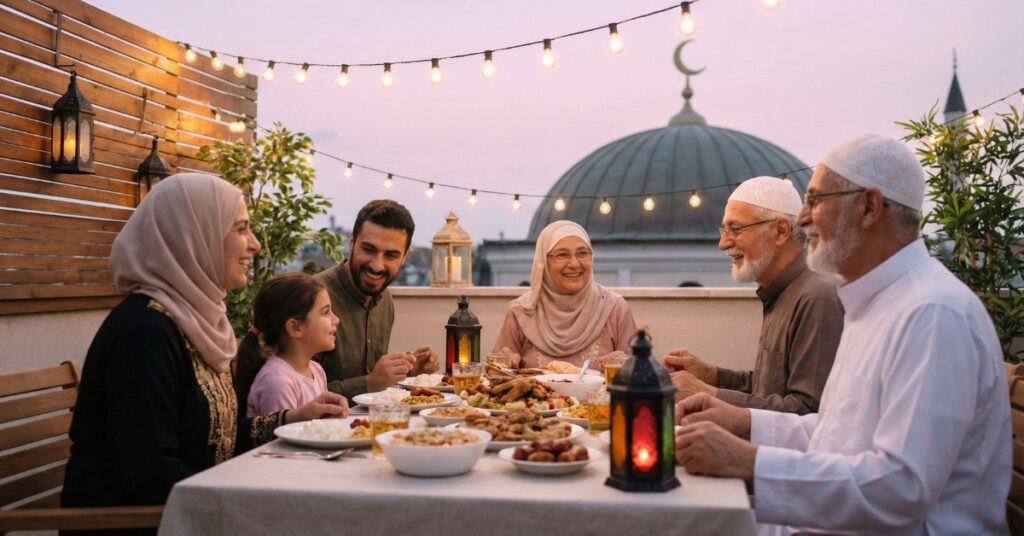
Breaking the fast is not just a physical relief after a long day of fasting—it is an act of worship. Islam teaches Muslims how to eat, when to eat, and with what intention to eat. Understanding the Etiquette of breaking fast in Islam helps transform iftar from a routine meal into a spiritually rewarding experience.
This blog answers common questions like “How should Muslims break their fast?”, “What’s the Sunnah way to eat iftar?”, and “What dua to say before eating in Ramadan?”, all based on the Qur’an and prophetic teachings.
The Sunnah of Iftar: How the Prophet (ﷺ) Broke His Fast
The Sunnah of iftar is simple, mindful, and filled with gratitude. According to authentic hadith:
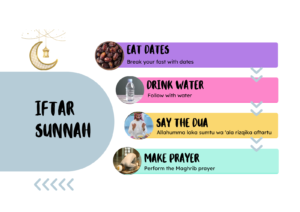
“The Messenger of Allah would break the fast with fresh dates before performing Salat. If there were no fresh dates then (he would break the fast) with dried dates, and if there were no dried dates then he would take a few sips of water.”
(Jami` at-Tirmidhi 696)
This highlights Prophet Muhammad’s iftar habits, which emphasized moderation and remembrance of Allah.
Key Sunnah Practices:
- Break the fast immediately at sunset.
- Begin with dates or water.
- Avoid overeating.
- Pray Maghrib before a full meal.
These practices form a core part of Fasting manners in Islam and help maintain both spiritual focus and physical health.
Dua Before Breaking Fast: A Moment of Acceptance
One of the most beautiful etiquettes is making Dua before breaking fast. The Prophet (ﷺ) said:
“When the fasting person breaks his fast, his supplication is not turned back.”
(Sunan Ibn Majah 1753)
Recommended Dua:
“Allahumma laka sumtu wa ‘ala rizqika aftartu” is the most commonly recited Dua while breaking our fast which means, “O Allah, for Thee I have fasted, and with Thy provision I have broken my fast.” (Sunan Abi Dawud 2358)
“Dhahaba al-zama’ wa abtalat al-‘urooq, wa thabata al-ajr, in sha Allaah” is the Dua meant to recite after breaking our Fast or Iftar meal, which means “Thirst has gone, the veins are moist, and the reward is sure, if Allah wills.”(Sunan Abi Dawud 2357)
This is the answer to a common question: “What dua to say before eating in Ramadan?”
Islamic Manners of Eating: Beyond Iftar
The Islamic manners of eating apply to all meals, including iftar and suhoor. The Qur’an guides us to lead a purposeful life, it guides us through everything and it has revelation regarding how we eat and how much we eat, Allah says:
“….eat and drink, but do not waste. Surely He does not like the wasteful.”
(Qur’an 7:31)
Sunnah Way to Eat and Drink:
- Spread out a cloth on the floor
- Wash both hands up to the wrists
- Begin with Dua / Bismillah
- Sit with one or both legs folded beneath
- Eat with the right hand
- Eat from what is nearest
- Pick up and eat any food that falls on the cloth
- Clean the plate and lick your fingers
- Do not lean while eating
- Do not find any fault in the food
- Do not eat food that is too hot
- Stop before being completely full
- End with Dua / gratitude
- Wash hands and rinse the mouth after your meal
These habits reflect Halal eating manners in Islam and promote self-discipline.
Suhoor and Iftar Etiquette: Balance and Blessing
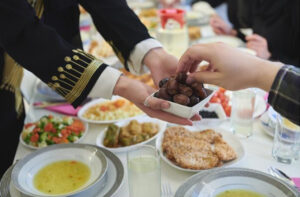
The Suhoor and iftar etiquette teaches Muslims balance. The Prophet (ﷺ) said:
“Take Suhur as there is a blessing in it.”
(Sahih al-Bukhari, 1923)
Allah’s Messenger (ﷺ) said, “The people will remain on the right path as long as they hasten the breaking of the fast.”
(Sahih al-Bukhari 1957) This Hadith reminds us of the importance of breaking the fast as soon as possible after sunset. Not only are we relieved from hunger and thirst, but this practice also allows us to fulfill the importance of Sunnah of our beloved Prophet (peace be upon him).
Etiquette Comparison:
|
Suhoor |
Iftar |
| Eat close to Fajr | Break fast promptly at Maghrib |
| Choose nourishing food | Avoid rushing to heavy foods (Initiate with dates or water) |
| Make intention for fasting | Focus on worship |
| Eat light, include proteins | Eat in moderation, avoid wastage |
Gratitude Before and After Meals in Islam
Gratitude before and after meals is central to Islamic teachings. The Prophet (ﷺ) said:
“Allah is pleased with His servant who says: Al-Hamdu lillah(i.e., praises Allah) while taking a morsel of food and while drinking.”
(Sahih Muslim, 2734)
Scholars like Imam Al-Ghazali emphasized that mindful eating strengthens humility and curbs the ego—especially during Ramadan
Final Reflection
The Etiquette of breaking fast in Islam teaches mindfulness, gratitude, and self-control. By following prophetic guidance, Muslims can turn daily meals into acts of worship—especially during Ramadan.
How did Prophet Muhammad (PBUH) break his fast?
He broke his fast with dates or water, made dua, prayed Maghrib, and then ate a light meal—reflecting the Etiquette of breaking fast in Islam.
What are the Islamic manners for eating?
Islamic manners include saying Bismillah, eating with the right hand, avoiding waste, and expressing gratitude.
How should Muslims break their fast?
Muslims should break their fast calmly, following the Sunnah of iftar, while remembering Allah and avoiding excess.
What’s the Sunnah way to eat iftar?
The Sunnah way is to eat mindfully, begin with dates, make dua, and stop before overeating.