ChatGPT
 Grok
Grok
 Perplexity AI
 Claude

Gratitude is more than simply saying “Alhamdulillah.” It is a way of recognizing Allah’s countless favors, appreciating them with our sincere heart, and using them in ways that please Him. Gratitude in Islam is deeply connected to faith, contentment, and spiritual growth. The words of Allah in the Qur’an and the teachings of Prophet Muhammad ﷺ repeatedly remind believers that a thankful heart attracts Allah’s mercy which increases His blessings. This article explores what Islam teaches about thankfulness in every situation.
What Is Thankfulness in Islam?
Thankfulness in Islam is known as Shukr. It means acknowledging every blessing as a gift from Allah, praising Him for it, and using those blessings in obedience to Him. Sabr (patience) and Shukr usually go together.
Everyone faces good and bad times during the course of his life. You must be able to think of some things that happened to you that made you happy and others that made you sad. Facing hardships makes a person stronger. With every difficulty, one learns important lessons in patience and endurance.Gratitude in Islam is expressed through the heart, the tongue, and one’s actions.
Allah reminds us:
“If you are grateful, I will certainly give you more. But if you are ungrateful, surely My punishment is severe.”
(Quran 14:7)
This powerful verse highlights that gratitude is not only an act of worship but also a means of receiving more of Allah’s favors.
The Blessings in Islam That We Often Overlook
Many people associate blessings with wealth or success, but Blessings in Islam extend far beyond material possessions. Good health, faith, family, knowledge, safety, time, and even the ability to repent are among Allah’s greatest gifts.
Allah says:
“If you tried to count Allah’s blessings, you would never be able to number them. Surely Allah is All-Forgiving, Most Merciful.“
(Quran 16:18)
Recognizing these everyday favors nurtures humility and protects the heart from envy and dissatisfaction.
A Test from Allah
People have the tendency to forget Allah during the good times and return to Him during difficulties. A Muslim should regard both good times and bad times as a divine test. During good times, Allah tests us to see if we are grateful for His favors. During bad times, He tests our patience and faithfulness.
Thankfulness to Allah in Every Situation
Life is filled with moments of happiness as well as trials. Islam teaches believers to remain thankful during both.
Rasulullah ﷺ’s Word on Gratitude and Patience
Allah’s Messenger (ﷺ) said about a true believer that:
“Strange are the ways of a believer for there is good in every affair of his and this is not the case with anyone else except in the case of a believer for if he has an occasion to feel delight, he thanks (God), thus there is a good for him in it, and if he gets into trouble and shows resignation (and endures it patiently), there is a good for him in it.”
[Sahih Muslim 2999]
As our beloved Prophet ﷺ has said in this passage, gratitude and patience are the mark of a true Mu’min (believer). When something good happens, his first impulse is to thank Allah. When something unpleasant happens, he does not give up hope. nor does he impatiently question Allah. He knows that if he sticks to his faith and sincerely prays to Allah for help and guidance, he will be rewarded in abundance Inshaa Allah.
Practicing Thankfulness to Allah during difficult times does not mean denying pain. Rather, it means trusting Allah’s wisdom while recognizing that His mercy always outweighs our understanding.
How to Thank Allah Every Day
Many Muslims ask How to thank Allah in practical ways. Islam provides simple yet meaningful methods. Sheikh Belal Assaad says gratitude and thankfulness is first and foremost to Allah and it can be done in three ways,
- By Acknowledgment
By acknowledging in the heart and mind that Allah is the one who has provided us everything and everything that’s around us.
- Gratitude In Words
Showing gratitude to Allah is saying with you words: words of remembrance, words of praise and thankfulness. For example say sincerely:
- Alhamdulillah
- Subhanallahi Wa bihamdidhi or
- We say the words that the Prophet ﷺ had taught us, “Subhanallahi Walhamdulillaahi wala ilaaha illallaahu WallahuAkbar”
The Prophet ﷺ said:
“Allah is pleased with His servant who says: Al-Hamdu lillah
while taking a morsel of food and while drinking.”
(Sahih Muslim 2734)
- Using Allah’s Blessings Responsibly
Using the blessings which Allah gave you in the right way. This one is more difficult than the other two ways. Your blessings are your eyes, your mouth, tongue, mind, heart, etc. Thanking Allah means acting upon them and using them in halal ways and avoiding what displeases Allah using them.
Allah instructed Prophet Dawud ﷺ’s family:
“Work gratefully, O family of David!“
(Quran 34:13)
Gratitude in Islam is demonstrated through actions, not merely words. Helping others through charity, kindness, and sincere advice also reflects appreciation for the Blessings of Allah that we have received.
Shukr in Islam: A Lifestyle, Not a Moment
Shukr in Islam is a continuous mindset rather than an occasional response. A grateful believer remembers Allah before he even tastes success, during his times of comfort and discomfort, and after receiving blessings of Allah.
One of the beautiful Quran verses about gratitude is,
“Remember Me; I will remember you. And thank Me, and never be ungrateful.“
(Quran 2:152)
This verse reminds believers that gratitude strengthens their relationship with Allah and keeps the heart spiritually alive. Thanking Allah even when you feel your life is miserable than others is something extraordinary in front of Allah, as His believers believe in His blessings and miracles even in the times of trials is what Allah expects from us instead of complaining and questioning in those tough times.
Hadith about Gratitude That Inspires Every Believer
One authentic Hadith about gratitude which beautifully demonstrates the Prophet ﷺ’s devotion is this:
Aishah (RA) reported that the Prophet ﷺ worshipped so much that his feet were swollen. It was said to him: Why do you undergo so much hardship despite the fact that) Allah has pardoned for you your earlier and later sins? Thereupon He ﷺ said: May I not (prove myself) to be a grateful servant (of Allah)?
[Sahih Muslim 2819]
This hadith teaches that gratitude is not merely spoken—it is reflected through worship, humility, and sincere obedience.
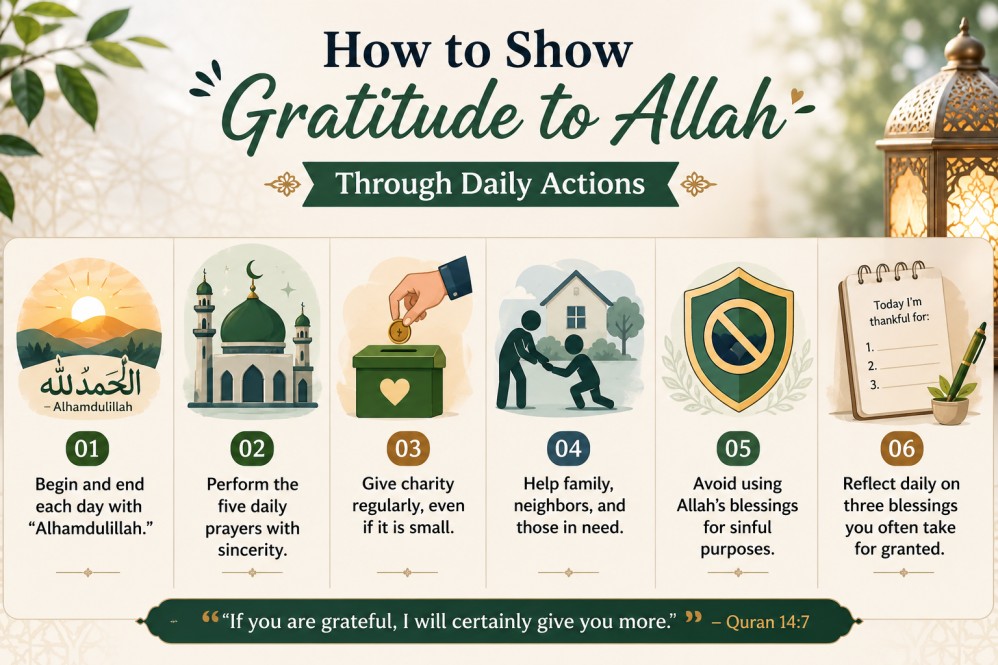
These simple acts nurture a thankful heart and increase awareness of Allah’s mercy.
Conclusion
Gratitude in Islam is one of the most beautiful qualities a believer can develop. It transforms ordinary moments into acts of worship and strengthens the relationship between a servant and Allah. The Qur’an repeatedly promises increase for those who are grateful, while the Prophet ﷺ demonstrated gratitude through his worship, character, and humility.
What does the Quran say about gratitude?
The Quran teaches that Allah increases His blessings for those who are grateful (Quran 14:7) and encourages believers to thank Him continually (Quran 2:152).
How can I thank Allah every day?
You can thank Allah by saying "Alhamdulillah", performing your prayers sincerely, remembering Him often, giving charity, and using His blessings responsibly.
Which Hadith talks about gratitude?
One well-known Hadith records the Prophet ﷺ saying, "Should I not be a grateful servant?" (Sahih al-Bukhari 4837; Sahih Muslim 2819).
Why is gratitude important in Islam?
Gratitude strengthens faith, brings inner peace, increases Allah's blessings, and develops humility and contentment.
Can gratitude increase provision?
Yes. The Quran promises that gratitude can lead to increase (Quran 14:7), and the prophetic example supports this.
How to show gratitude to Allah during hardship?
Be patient, remember past favors, increase supplication, and continue righteous deeds—these are praised in scripture and hadith.