ChatGPT
 Grok
Grok
 Perplexity AI
 Claude

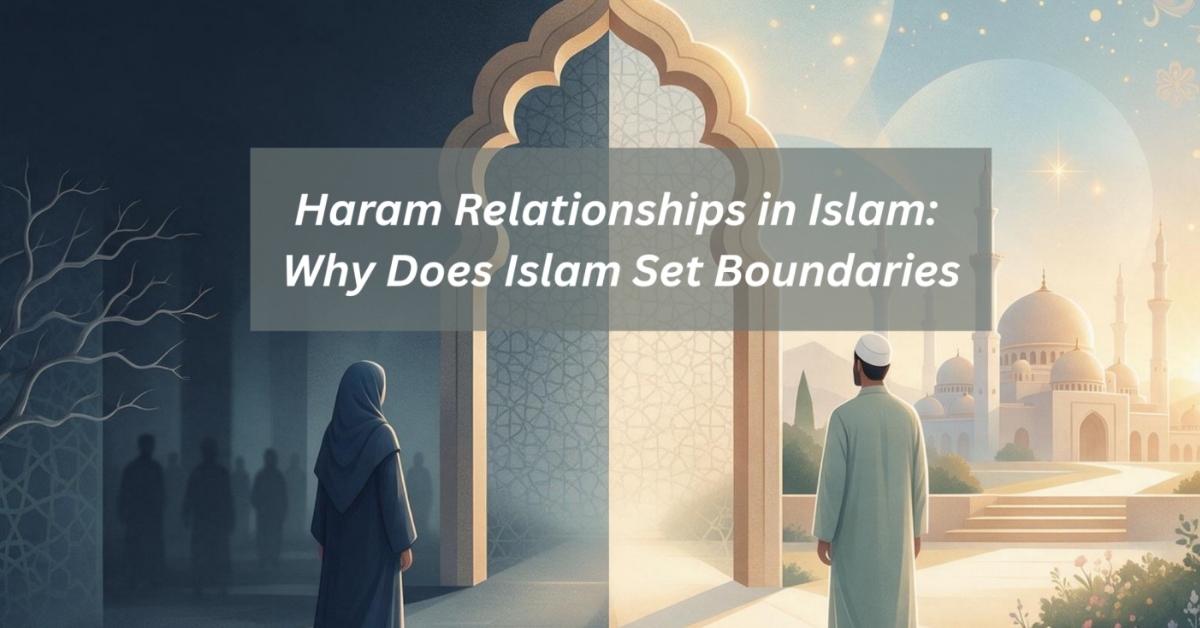
Love is a natural emotion that Allah has placed in the human heart. Islam does not forbid people from loving; it teaches them how to protect love from becoming a source of sin, emotional harm, or broken trust. This is why haram relationships in islam are not simply about a list of “don’ts.” They are about protecting faith, dignity, family, and the heart.
In this era of swiping right and catching up with the opposite gender casually, let’s see how we can strive and pray for a righteous and good life partner and look forward to a healthy, halal relationship in this blog. When a relationship is halal we do not have to fear about the society nor the Akhirah.
What is haram relationship in islam?
An unmarried man and woman may interact for genuine needs such as education, work, business, or community matters while observing Islamic boundaries. The concern begins when interaction becomes an intimate relationship outside marriage—such as secret romantic involvement, sexual conversations, physical intimacy, private meetings, or emotional attachment that crosses Islamic limits.
So, what is haram relationship in islam? In simple terms, it is a relationship between non-mahram people involving actions or intimacy prohibited in Islam or which will eventually lead them to hell.
The Qur’an gives a powerful principle to avoid haram relationships in Islam:
“Do not go near adultery. It is truly a shameful deed and an evil way.”
[Qur’an 17:32]
Allah says “do not go near,” teaching believers to avoid even the pathways that can lead to zina in islam, not merely the final act.

Dating in islam
Modern dating can involve emotional intimacy, private communication, frequent meetings, physical affection, and sometimes sexual involvement before marriage. Islam sets boundaries because attraction can gradually weaken self-control.
So, why is dating haram in islam? The issue is not that love itself is forbidden. Islam distinguishes between natural feelings and behaviours that are not permissible before marriage.
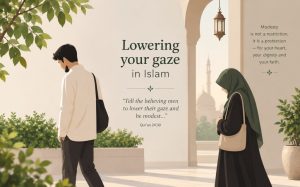
O Prophet! Tell the believing men to lower their gaze and guard their chastity. That is purer for them. Surely Allah is All-Aware of what they do. And tell the believing women to lower their gaze and guard their chastity, and not to reveal their adornments except what normally appears. (Qur’an 24:30–31). Lowering your gaze in islam is part of developing modesty and self-control.
The Prophet ﷺ also warned against being alone with non-mahram women.
Beware of getting, into the houses and meeting women (in seclusion).
[Sahih Muslim 2172a]
In an extract from the lecture of Belal Assaad on dating in Islam , he is heard saying, “going out (a man and a woman going out and being alone) together is not a need for marriage to be successful. Some people say, How are we supposed to know who we are going to marry if we don’t go on dates or go out? Going out on a date is hardly a precursor to your marriage’s success. In fact the majority of them go out on dates for a very long time but when it comes to marriage that’s like a whole new world for them.
Allah gave us other means of how to get to know each other within certain supervision and boundaries and Islam encouraged the prospective husband and wife to look at each other, to speak to each other , to study or ask about each other and as talking behind someone is not allowed, in this case Allah allowed to ask about the person certain things that the person wouldn’t normally like people to talk about but for the purpose of marriage (within measures you are allowed).
So, certain things or alternatives have been made so that you have a blissful and successful marriage.”
Love and marriage in islam: A halal path for love
Islam does not deny romantic love. It gives it a responsible destination called marriage.
The Qur’an describes marriage beautifully:
“And one of His signs is that He created for you spouses from among yourselves so that you may find comfort in them. And He has placed between you compassion and mercy. Surely in this are signs for people who reflect.”
[Qur’an 30:21]
This is the heart of love and marriage in islam. A husband and wife can express affection, companionship, intimacy, and emotional closeness in a relationship Allah has made lawful.
Allah’s Messenger (ﷺ) said, “O young people! Whoever among you can marry, should marry, because it helps him lower his gaze and guard his modesty (i.e. his private parts from committing illegal sexual intercourse etc.), and whoever is not able to marry, should fast, as fasting diminishes his sexual power.”
(Sahih al-Bukhari 5066)
This guidance offers a halal relationship in islam rather than leaving people without direction.
Love before marriage in islam: What is allowed?
Having feelings for someone is not, by itself, a sin. A person cannot always control when admiration or attraction begins. What matters is how those feelings are handled. We must remember that having feelings doesn’t give us the license to demand intimacy which is prohibited.
If someone is seriously considering marriage, communication may be necessary, but it should remain respectful (better through parents or elders of families), purposeful, under supervision and within Islamic limits. Intentions should be clear, unnecessary private intimacy should be avoided, and involving families or trusted people can help keep the process responsible.
Islamic relationship rules guide behaviour; they are not meant to shame people for having natural emotions.

Why does Islam prohibit zina and its pathways?
Zina in islam is a major sin, but the Qur’anic instruction is broader: believers are told not to approach it. The wisdom behind these boundaries includes protecting faith, emotional well-being, family relationships, chastity, and personal honour.
These rules apply to both men and women. Islam does not place the entire responsibility for modesty on one gender.
While sharing a hadith, Hisham Abu Yusuf says:
A young man, Ka’ab Al Ansari comes to the Prophet Muhammad ﷺ. One day, this young man was walking in the marketplace and he saw a pretty lady there. The lady was selling dates and he thought to himself what if i tell the lady that she was more beautiful than the dates and he started talking to her and they both disappeared. In his own words he said we did everything except the zina (intercourse). He was the companion of the Prophet ﷺ in the life of the Prophet ﷺ. He realizes his mistake and runs straight to Abu-bakar Al Siddiq and says, “Ya Abubakar! I have felt for this lady and I have done everything with her except zina. What should I do? Is there any hope?” Abubakar said, “Go away, keep it to yourself, you don’t have to tell other people about this and seek Allah’s forgiveness. He goes to Umar and tells the same story and eventually he goes to the prophet Muhammad ﷺ and says, I committed this mistake with this woman, I fell for this woman. I gave it to my desires. Where do I go from here? The Prophet ﷺ turned away and walked away from him. Then Allah revealed the verses of the Quran and The prophet ﷺ called him back and said, “Do you know that Allah revealed Quranic verses just for your question?”. Ka’ab questioned, “For me?”. The prophet ﷺ said, “Yes, for you and the whole Ummah.”
Establish prayer O Prophet, at both ends of the day and in the early part of the night. Surely good deeds wipe out evil deeds. That is a reminder for the mindful.
[Quran 11:114]
“Everything you did with the woman will be forgotten if you just keep up with the Salah.” He asked, “is that just for me?” The prophet ﷺ said, “Not just for you Ka’ab but for the entire Ummah.”

From a haram relationship to a halal relationship
Someone who has already crossed boundaries should not think that Allah’s mercy is closed. The right response is sincere tawbah: stop the sinful behaviour, regret it, seek Allah’s forgiveness, and make a genuine effort not to return to it.
Top 10 Haram relationships,
- Girlfriend or boyfriend
- Secret dating
- Flirting with Non-Mehrams
- Online love chats
- Meeting in private (with Non-Mehram)
- Sharing romantic pics
- Joking in DMs (with opposite gender)
- Physical touch
- Living together before Nikah
- Talking without a real reason
Tuaha Ibn Jalil (motivational speaker and life coach) says, I have seen that when we displease Allah in order to impress people or a person (be it a girlfriend or a boyfriend), that same person becomes the source of heartbreak and depression for you. So it’s your choice now.
If two people genuinely intend to marry, they can change the nature of their relationship by pursuing marriage respectfully and responsibly. A halal relationship is not simply a change of label; it means bringing the relationship within the boundaries Allah has permitted.
Conclusion
Islamic boundaries around relationships are not designed to make life joyless. They protect something precious: the heart. Islam recognizes attraction, affection, and the desire for companionship, but directs them toward commitment, responsibility, and marriage, avoiding haram relationships in Islam.
We all have skeletons in our closet. We all have committed sins. We all have made mistakes. We are all held by laziness, by our desires, by our family, by our communities, by our environments. We are all held back. We may be a million steps away from Allah but it only takes one step or one word to turn back to Him.
Sincere repentance combined with stepping up our daily (obligatory) prayers,and righteous deeds actively erases previous shortcomings and major sins. When love is guided by faith, it can become a source of tranquillity, mercy, and lasting reward.
Why is dating haram in islam?
A: Because it involves seclusion, emotional attachment without accountability, and often leads to sin.
Is dating completely forbidden in Islam?
Dating involving prohibited intimacy, secrecy, private romantic attachment, or behaviour leading toward zina is not permissible. Marriage-focused interaction (under supervision) should remain within Islamic boundaries.
Can a Muslim talk to someone they want to marry?
Yes, but with clear intentions, family involvement, and no private meetings.
What should I do if I am already in a haram relationship?
Do not lose hope. Turn to Allah, leave prohibited aspects of the relationship, sincerely repent, and if marriage is genuinely suitable, pursue a lawful path toward nikah.
How do I make my relationship halal?
A: Involve families, set marriage intentions, avoid seclusion, and keep interactions respectful.