ChatGPT
 Grok
Grok
 Perplexity AI
 Claude

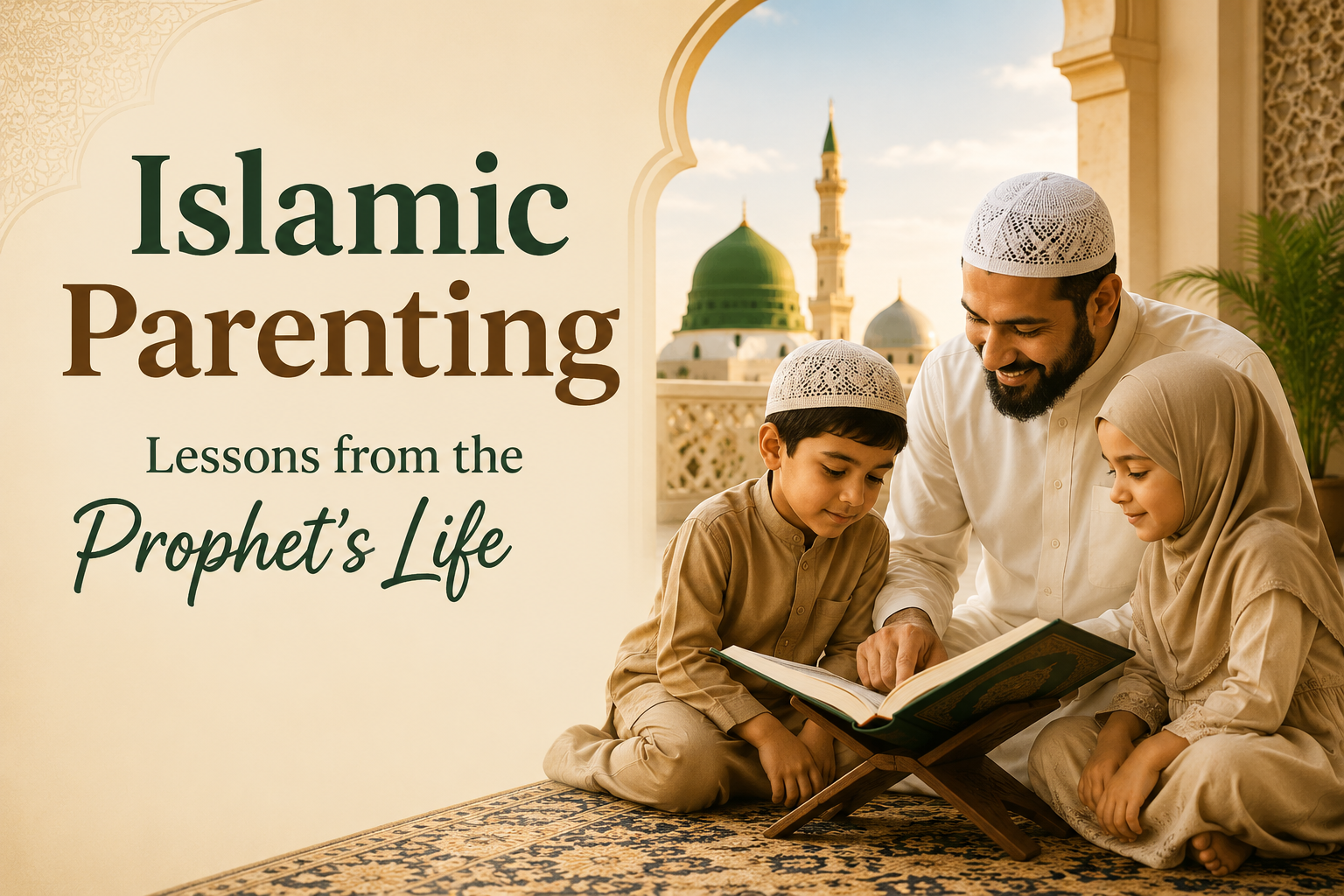
Parenting is one of the greatest responsibilities given by Allah. Islam offers timeless guidance through the Quran and the life of Prophet Muhammad. His mercy, patience, and wisdom provide the perfect model for families seeking peace and righteousness at home.
This article explores Islamic parenting through authentic Quranic teachings and Hadith, helping parents nurture children with love, faith, and strong character.
Parenting is not an easy task as it needs patience, perseverance and will to give our best to our upcoming generations. Parents have great position and rank in Islam. As per our Islamic teachings paradise lies under the feet of our mother while father is the door to Paradise. In this era of Technology and Science our kids have a wide pool of knowledge to indulge in. At the same time they are more prone to the bad impacts of technology on their tender minds. In situations like these we parents not only get confused but we panic on thinking how and where our future generations are being led.
The Importance of Islamic Parenting in Islam
Children are considered a trust (amanah) from Allah. Parents are responsible not only for feeding and educating them but also for shaping their morals, faith, and behavior.
Allah says in the Quran:
“O believers! Protect yourselves and your families from a Fire whose fuel is people and stones.” [Surah At-Tahrim 66:6]
This verse highlights the spiritual responsibility of parents. Islamic parenting is not limited to worldly success; it focuses on preparing children for both this life and the Hereafter.
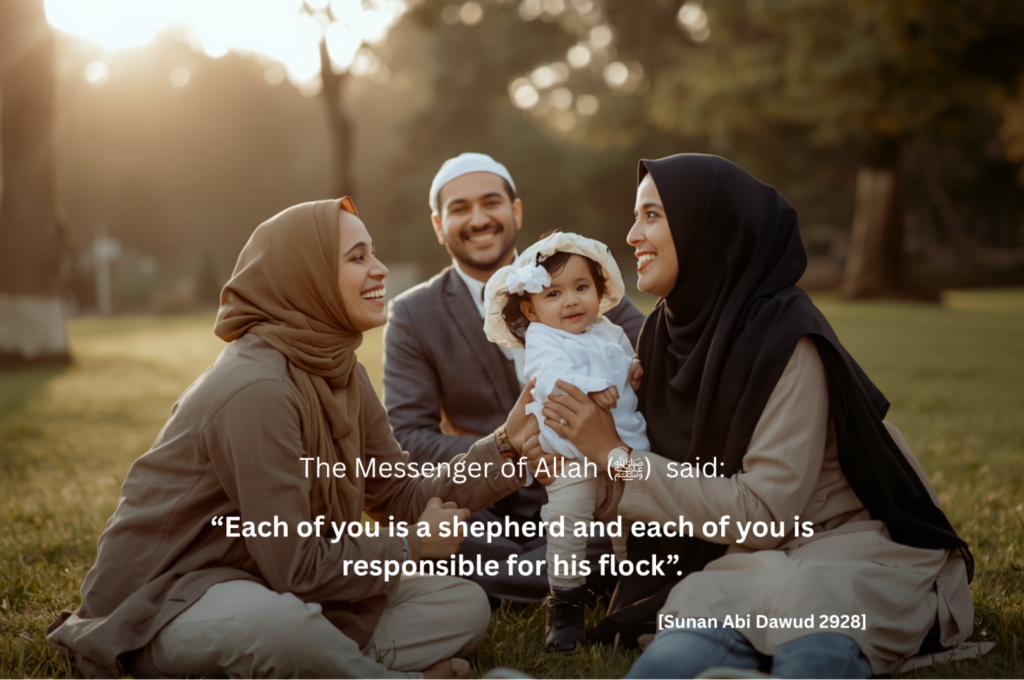
The Prophet ﷺ also said:
“A man is a shepherd in charge of the inhabitants of his household and he is responsible for his flock; a woman is a shepherdess in charge of her husband’s house and children and she is responsible for them….” [Sunan Abi Dawud 2928]
There is also immense reward for raising daughters with kindness and protecting them. The prophet mentioned that those who raise daughters well, treating them with dignity and not neglecting them will find protection from hellfire.
The Prophet (ﷺ) said,
“Whoever is in charge of (put to test by) these daughters and treats them generously, then they will act as a shield for him from the (Hell) Fire.” [Sahih al-Bukhari 5995]
This Hadith reminds parents that raising children is a sacred duty.
Prophet Muhammad Parenting Lessons
One of the most beautiful aspects of the Prophet’s life was the way he treated children. He showed kindness, patience, respect, and emotional warmth.
1. Showing Love and Affection
The Prophet ﷺ openly expressed love to children. He kissed his grandsons Hasan and Hussain frequently. When a man once remarked that he never kissed his children, the Prophet ﷺ replied:
“He who shows no mercy to the people, Allah, the Exalted and Glorious, does not show mercy to him.” [Sahih Muslim 2319a]
Shidad ibn al-Had reported: The Messenger of Allah, peace and blessings be upon him, came out to us for one of the evening prayers and he was carrying his grandson Hasan, or Husayn. The Prophet came forward and put him down, then began prayer with exaltation and prayed. He prostrated at the end of his prayer for a long time. I raised my head and the child was upon the Prophet’s back while he was prostrating, so I returned to my prostration. When the Prophet finished the prayer, people said, “O Messenger of Allah, you prostrated at the end of your prayer for a long time, until we thought something happened or you received a revelation.” The Prophet said, “None of that happened. Rather, my grandson was riding on my back and I disliked rushing him before he met his needs.” [Sunan al-Nasā’ī 1141]
These Prophet Muhammad parenting lessons teach that affection is not weakness. Loving children openly helps them grow emotionally secure and confident.
Raising Children in Islam with Compassion
Children learn more from behavior than words. The Prophet ﷺ never used harshness unnecessarily and always corrected mistakes with wisdom.
Patience During Mistakes
Narrated Anas:
I served the Prophet (ﷺ) for ten years, and he never said to me, “Uf” (a minor harsh word denoting impatience) and never blamed me by saying, “Why did you do so or why didn’t you do so?” [ Sahih al-Bukhari 6038 ]
Our famous scholar, Nouman Ali Khan, shares his experience in a lecture and says:
“There are some parents whose daughters come up to me sometimes, saying, ‘My mom is never happy with me. She is not happy with the way I stand, the way I sit, the way I dress, the way I wear my socks. They’re like: “Why are you smiling? Why are you not smiling? Why are you facing this way? Why are you not facing that way?” I can’t take it anymore.’
Now, the kid never listens to her parents because the parents are constantly criticizing. When these parents are asked to go a little easy on their kids, they are like, ‘No, no, we have to watch out for our kids.’
A shepherd doesn’t take the sheep and say, ‘Eat this batch of grass.’ The sheep has some room—some room to operate.”
This example of Raising children in Islam teaches parents to avoid constant criticism and humiliation. Gentle correction builds trust and respect.
Encouraging Good Character
The Prophet ﷺ focused heavily on manners and ethics. He taught honesty, kindness, respect for elders, and compassion for the weak.
Allah says:
“Indeed, in the Messenger of Allah you have an excellent example.”
[Quran 33:21]
Parents should model good behavior because children imitate what they see at home. A child whose upbringing is associated with continuous shouting, constant screaming, beating or punishing in any sort behaves the same way with other children. We must remember this while we lose our temperament and give in.
Islamic Family Values and Strong Bonds
A healthy Muslim household is built upon mercy, communication, and mutual respect.
Teaching Faith from an Early Age
The Prophet ﷺ encouraged teaching children prayer early in life. He said:
“Command your children to pray when they become seven years old, and beat them for it (prayer) when they become ten years old; and arrange their beds (to sleep) separately. ”
[Sunan Abi Dawud 495]
Teaching Salah gradually helps children develop discipline and spiritual attachment. The love for Salah would instill many good instincts in him.
Spending Quality Time
The Prophet ﷺ raced with his wife Aisha (RA), played with children, and listened attentively to others. This shows that emotional connection is part of Islamic family values.
Modern parents often become busy with work and screens, but children need meaningful attention and conversation.

Scholar Mufti Ismail Menk says, “Parents are supposed to be spending time with those they are responsible for. Some are literally termed orphans whose parents are alive because their parents don’t spend time with their family but call themselves a good Muslim, often busy with their work. Those children are mostly the ones who grow up and are on drugs and other bad habits because they never spent time with them. Rather enjoy yourself on a family holiday. Take your children on a holiday and get yourself to enjoy in that little shell that Allah has given you. What’s the point of having thousands of friends when your own family is crying for your company? Can’t you spend 5 minutes with them? Can’t you speak with them with a good tongue?
Parenting in Islam: Discipline with Wisdom
Discipline in Islam is balanced with mercy. The goal is guidance, not fear.
Avoiding Harsh Parenting
The Prophet ﷺ never humiliated children publicly. He corrected with gentleness and wisdom. Parents should avoid yelling, insults, and comparisons.
Allah says:
“And speak to people good words.”
[Quran 2:83]
This includes how parents speak to their own children.
Teaching Responsibility
Children should gradually learn responsibility according to their age. Assigning small tasks and encouraging accountability builds maturity and confidence.
Good Parenting in Islam focuses on nurturing independent and morally responsible individuals.
Islamic Upbringing of Children in the Digital Age
Today’s parents face challenges unknown to earlier generations.
Some are:
- Excessive screen time
- Social media pressure
- Weakening family bonds.

Building Islamic Identity
Parents should create an environment where Islam feels natural and beautiful. Some practical ways include:
- Praying together as a family
- Reading Quran daily
- Sharing stories of Prophets
- Encouraging gratitude and dua
- Limiting harmful media exposure
- Encouraging children to memorize verses from Quran
The Islamic upbringing of children requires consistency and positive reinforcement.
Moral Education in Islam Begins at Home
Schools may teach academics, but values begin within the family. A mother is the first teacher. Children should learn truthfulness, modesty, patience, and empathy through daily interaction.
The Prophet ﷺ said:
“Indeed among the believers with the most complete faith is the one who is the best in conduct, and the most kind to his family.”
[Jami` at-Tirmidhi 2612]
This Hadith reflects the essence of Moral education in Islam.
Parenting Guidance in Hadith for Everyday Life
Authentic Hadiths offer practical parenting advice relevant even today.
Teach Through Example
Children imitate adults more than they obey instructions. If parents pray regularly, speak respectfully, and avoid anger, children naturally absorb these habits.
Make Dua for Your Children
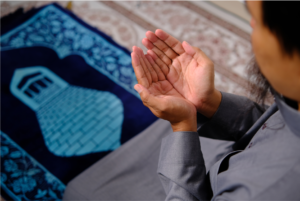
Many Prophets prayed for righteous offspring. One beautiful dua from the Quran is:
“My Lord, make me an establisher of prayer, and [many] from my descendants.”
[Quran 14:40]
This shows the importance of spiritual concern for future generations.
Encouragement Over Fear
The Prophet ﷺ motivated people with hope and kindness. Effective Parenting guidance in Hadith encourages children positively rather than creating constant fear.
Islamic Discipline for Children Without Harshness
Discipline should teach accountability while preserving dignity.
Healthy Islamic discipline for children includes:
- Setting clear boundaries
- Explaining consequences calmly
- Rewarding good behavior
- Being consistent
- Avoiding humiliation and abuse
The Prophet ﷺ balanced firmness with mercy, making children feel safe and respected.
What Islamic Scholars say about parenting?
Sheikh Assim Al Hakeem shares, “A parent asked Dua to recite for a 2 year old child who does not listen or behave and is ill mannered, hyper active, I feel like crying”
For this Sheikh says, “One option is to reprimand or continuously torture or hit the 2 year old in order to stop him and in order to vent out your pressure but definitely this option is oot of the question, its filled with negativity and is temporary. The child might stop for a while but repeat it after 5 minutes and even more. Or you may deal with the child with love, compassion and with discipline at the same time.
Beating the child at this age is not at all recommended. Firstly they wouldn’t understand. They would feel the pain. They associate that pain with ill feelings and hatred. They don’t feel the love coming from you when you are deceiving them by beating, punching or trying to hurt them.We have to understand that this is their age in the first place. We can discipline them with love and with conviction while hugging them, kissing them while giving them things that they enjoy. Things that they enjoy need not necessarily be candy or ice-cream which has high sugar content and would make them hyper and have an impact on their health as well.”
Conclusion
The life of Prophet Muhammad provides a timeless model for successful parenting. His compassion, patience, fairness, and wisdom remain relevant for every generation.
True Islamic parenting is about more than rules and discipline. It is about raising children who love Allah, respect others, and carry strong moral values into society.
By following Quranic teachings and the example of the Prophet ﷺ, Muslim families can build homes filled with mercy, faith, and emotional security.
What are the main Prophet Muhammad parenting lessons?
The Prophet ﷺ taught kindness, patience, emotional affection, fairness, and leading by example when dealing with children.
Why are Islamic family values important?
Islamic family values strengthen relationships, create emotional security, and help children grow spiritually and morally.
How does Islam teach discipline for children?
Islam encourages balanced discipline with wisdom, patience, clear boundaries, and mercy instead of harsh punishment.
What role does Hadith play in parenting?
Authentic Hadiths provide practical guidance about love, discipline, education, and moral development for children.