ChatGPT
 Grok
Grok
 Perplexity AI
 Claude

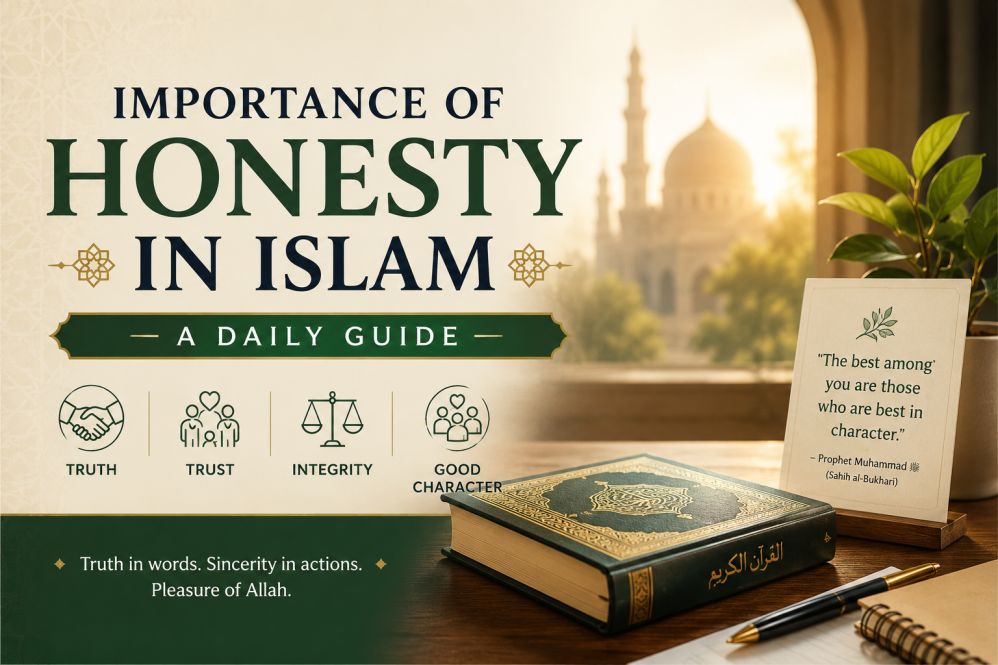
Honesty is a quality that everyone values. Whether it’s among family, friends, colleagues, or strangers, trust begins with telling the truth. Tahdhib is derived from the Arabic term ‘Hadhaba’, which means to train, clean, improve and refine someone. Tahdhib thus means training and education for personal improvement., which is also called moral education. Good moral behaviour is the basis of a successful Islamic life.
Life on earth began as a test from Allah to see if we could be His true servants and fight off the temptations of the Shaitan.The importance of honesty is repeatedly highlighted in the Qur’an and the Sunnah, encouraging Muslims to be truthful in both words and actions.
The Importance of Honesty According to the Qur’an
The Importance of honesty is clearly emphasized in the Qur’an. Allah commands believers to remain truthful and to keep the company of those who value honesty and stay truthful to their Lord and to others.
“O believers! Be mindful of Allah and be with the truthful. “
(Qur’an 9:119)
This verse reminds us that honesty is more than avoiding lies—it is a way of life. A Muslim must stop himself from telling lies. One lie often leads to a chain of lies. Sooner or later, when the truth comes out, the only one hurt is the liar himself.
Trust in Islam can never be overlooked. A believer must make sure that whenever he makes a promise, he keeps it to the best of his ability. Only then Allah loves him, only then will others respect him and trust his word.
Allah also says:
“O you who believe! Fear Allah and speak words of appropriate justice.”
(Qur’an 33:70)
This guidance encourages truthful speech, reminding Muslims that every word they speak should reflect sincerity, fairness, and respect.
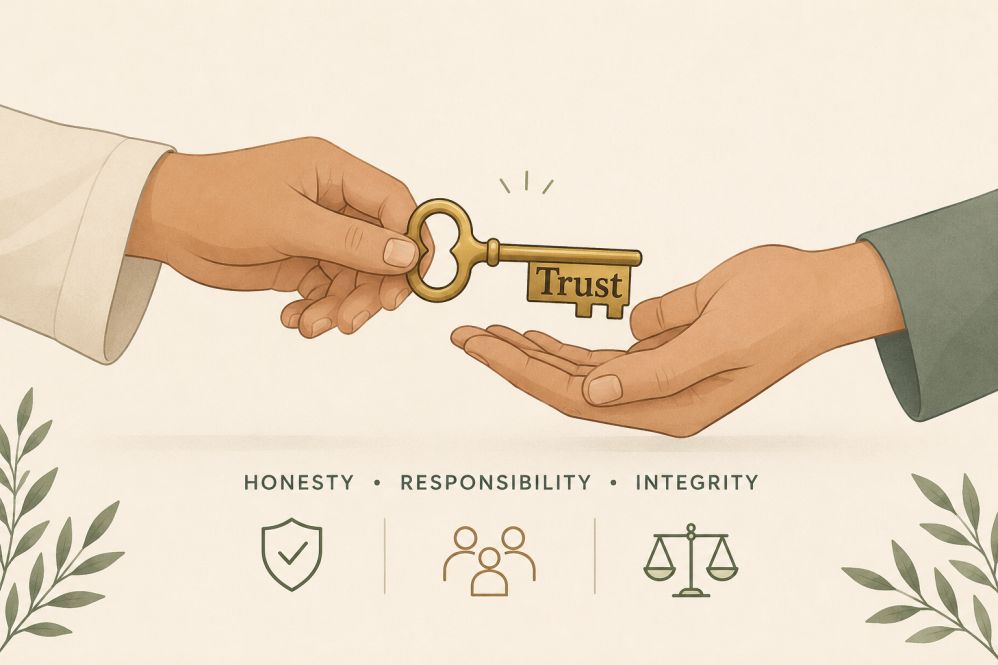
Honesty in Islam Is a Sign of True Faith
Honesty in Islam extends beyond simply telling the truth. It includes keeping promises, fulfilling responsibilities, dealing fairly with others, and remaining sincere even when no one is watching.
Prophet ﷺ’s example
Prophet Muhammed ﷺ was a very truthful and trustworthy person. Even before he was chosen by Allah to be His messenger, people liked His honest character. They called Him “Ameen” which means “Trustworthy” and “Sadiq” which means the “Truthful One”.
Rasulullah ﷺ said,
“If anyone is pleased to love Allah and His Messenger, or rather to have Allah and His messenger love him, he should speak the truth when he says anything, and fulfill his trust when he is in a position of trust.” [Transmitted by Baihaqi]
On the day of judgement we will be questioned how we behaved on earth.
“Indeed, in the Messenger of Allah you have an excellent example for whoever has hope in Allah and the Last Day, and remembers Allah often.”
[Quran 33:21]
The Prophet ﷺ also said:
“Truthfulness leads to righteousness, and righteousness leads to Paradise. And a man keeps on telling the truth until he becomes a truthful person. Falsehood leads to Al-Fajur (i.e. wickedness, evil-doing), and Al-Fajur (wickedness) leads to the (Hell) Fire, and a man may keep on telling lies till he is written before Allah, a liar.”
(Sahih al-Bukhari 6094)
This Hadith beautifully shows how Truthfulness in Islam shapes both a person’s character and their relationship with Almighty-Allah.
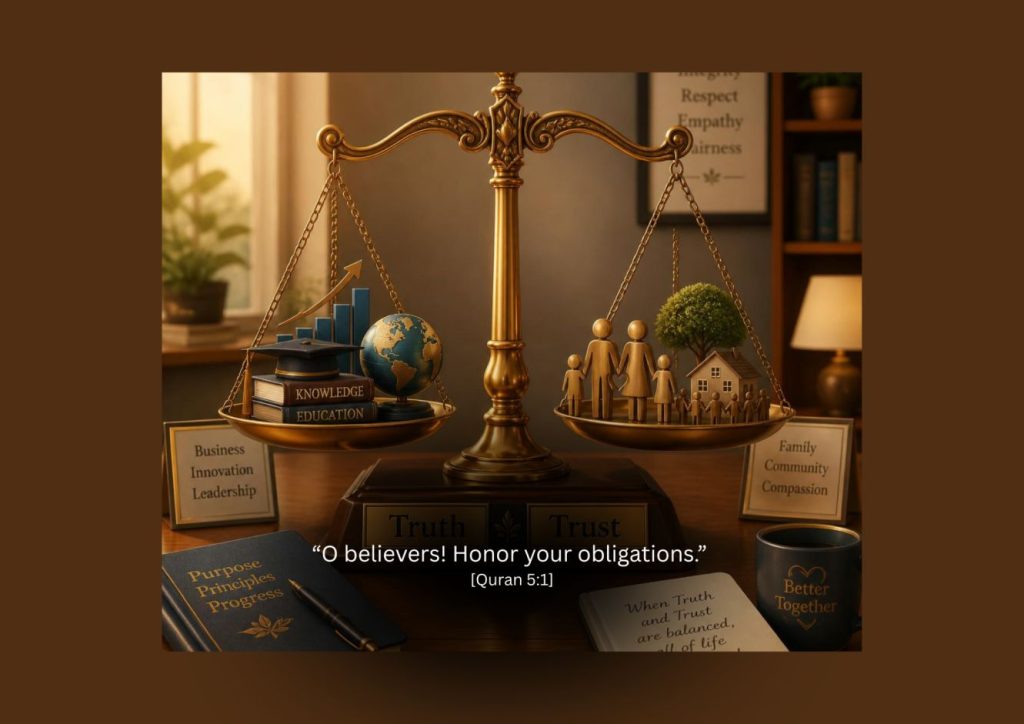
Islamic Ethics in Everyday Life
One of the strengths of Islamic ethics is that they guide believers in every aspect of life.
At Home
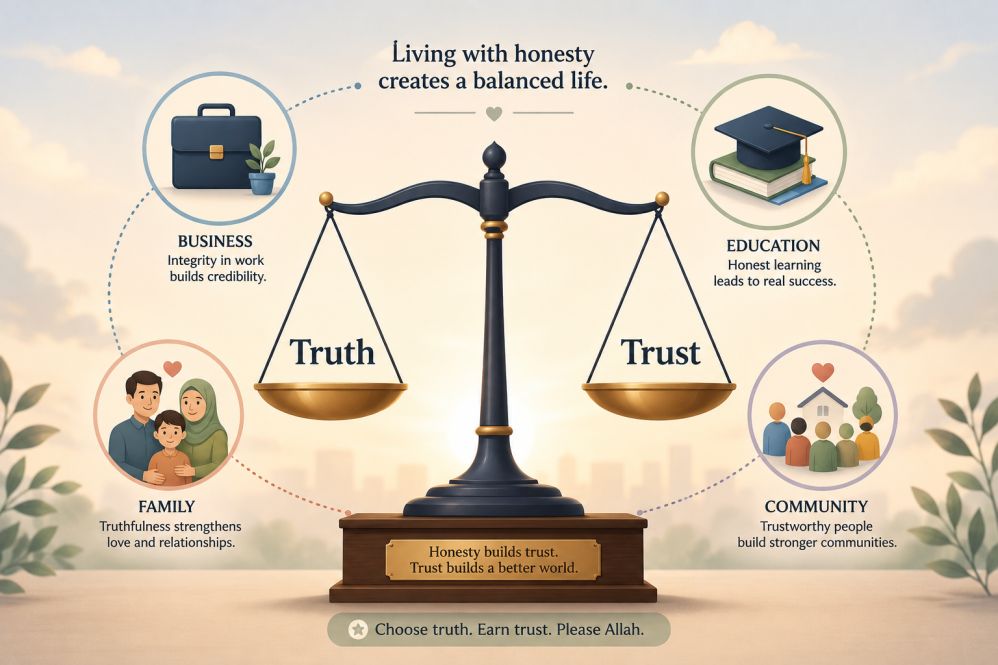
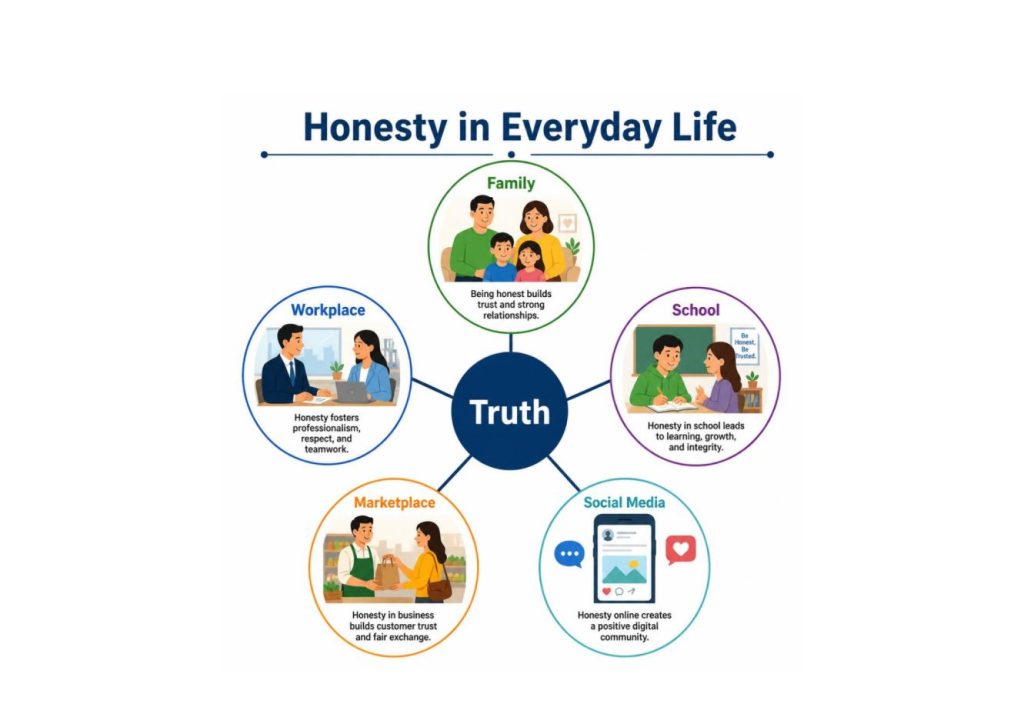
Being honest with family members strengthens love, respect, and understanding. Trust grows when people know they can rely on each other’s words. Keeping their promises, protecting their secrets, not revealing their sins are also some forms of ethics in Islam which can never be ignored.
The Quran tells us to be truthful and trustworthy in many places,
“Do not mix truth with falsehood or hide the truth knowingly.”
[Quran 2:42]
At Work and in Business
Islam encourages fairness in every transaction. Hiding defects, cheating customers, or making false claims goes against the teachings of Islam. Cheating partners by unjust sharing of profit are some mistakes which are overlooked by those who do not fear Allah.
The Prophet ﷺ said:
“Whoever deceives is not one of us (my followers).”
(Sahih Muslim 102)
At School and Online
Whether completing an assignment, taking an exam, or posting on social media, honesty should remain a guiding principle. Integrity matters even when no one is watching. Creating fake profiles and deceiving people are some forms of unethical practices which are not even seen as sin anymore and that’s so pathetic and invites problems.
Lying in Islam and Why It Matters
Islam strongly warns against lying in Islam because dishonesty slowly weakens both faith and relationships. A Muslim must stop himself from telling lies. One lie often leads to a chain of lies. Sooner or later, when the truth comes out, the only one hurt is the liar himself. A believer must make sure that whenever he makes a promise, he keeps it to the best of his ability. Only then Allah loves him, only then will others respect him and trust his word.
The Prophet ﷺ said:
“The signs of a hypocrite are three:
- Whenever he speaks, he tells a lie.
- Whenever he promises, he always breaks it (his promise ).
- If you trust him, he proves to be dishonest. (If you keep something as a trust with him, he will not return it.)”
(Sahih al-Bukhari 33)
Even small acts of dishonesty can become habits if they are ignored. Choosing truth, even when it is difficult, builds a stronger character and earns the pleasure of Allah.
Allah clearly says in the Quran,
“O believers! Why do you say what you do not do? How despicable it is in the sight of Allah that you say what you do not do!”
[Quran 61:2-3]
Simple Honesty Examples We Can Follow
Practicing honesty often begins with small, everyday choices. Some practical honesty examples include:
- Returning extra change received by mistake.
- Keeping the things safely which was given to you to safeguard it rather than using it without asking.
- Admitting mistakes instead of blaming others.
- Being truthful in school, be it in exams or avoiding simple lies just to entertain.
- Being honest and ethical at work.
- Keeping promises, even when the situation becomes difficult.
- Returning the money borrowed within a committed date and avoiding false promises.
- Avoid asking people for help by creating a false situation just to gain sympathy and financial aid.
These simple actions help strengthen trust in Islam and create healthier relationships within families and communities with the main motive being to please Allah.
Conclusion
The Importance of honesty is one of the central teachings of Islam. The Qur’an and the Sunnah encourage believers to speak the truth, act with integrity, and remain trustworthy in every situation.It is very important to be truthful and to keep promises. Nobody believes a liar. Nobody trusts a person who breaks promises. Liars and trustworthy people soon find they have no true friends.
A community without trust can never work together to improve their lives because everyone questions the other’s motives. Only people who are trustworthy can succeed in forming a successful community.
What does the Qur'an say about honesty?
The Qur'an encourages believers to be with the truthful (Qur'an 9:119) and to always speak words that are right and just (Qur'an 33:70).
Does Islam forbid lying?
Yes. Islam strongly discourages lying because it damages trust, harms relationships, and leads a person away from righteousness.
How can Muslims practice honesty every day?
By speaking truthfully, keeping promises, being fair in business, admitting mistakes, and treating others with sincerity and respect.
What does Islam say about lying in business?
Islam strongly condemns deception in trade. Sellers must disclose defects and terms honestly. The Quranic emphasis on justice and the Prophet’s guidance on fair dealing make truthful commerce a religious duty.
How can parents teach children honesty examples?
Use simple, everyday examples: admitting mistakes, returning found items, keeping promises, and praising truthful behaviour. Teach through stories of the Prophets ﷺ and short hadiths that highlight truthfulness leading to trust and Paradise.
What should I do if someone lies about me?
Respond calmly and seek evidence; aim for reconciliation where possible. The Quran and Prophet ﷺ encourage patience, seeking justice, and avoiding retaliation. If needed, pursue correction through trusted community mechanisms.