ChatGPT
 Grok
Grok
 Perplexity AI
 Claude

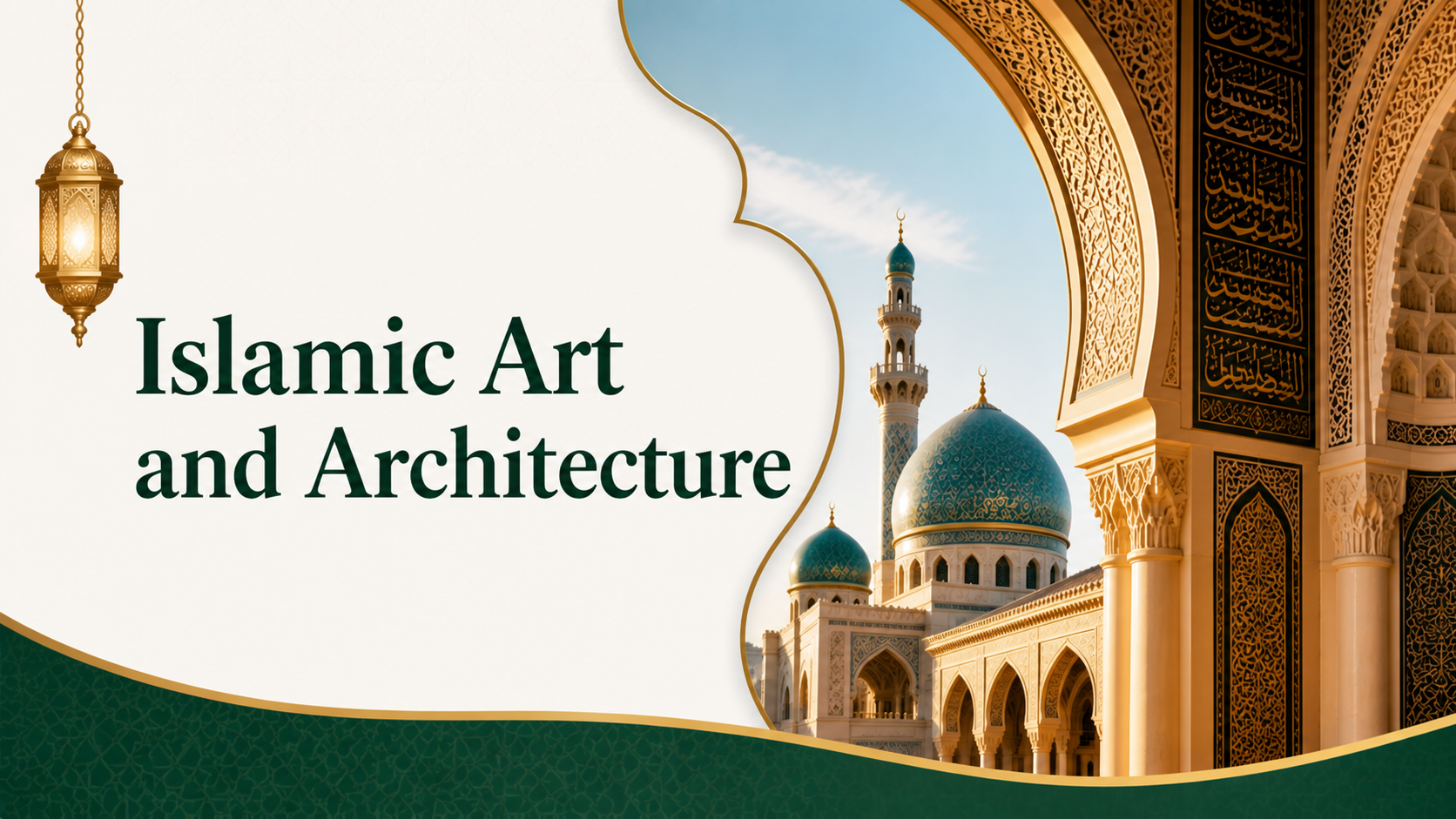
Islamic art and architecture is not merely about aesthetics—it is a profound expression of spirituality, unity, and devotion to Allah. Rooted in the teachings of the Qur’an and the traditions of the Prophet Muhammad (ﷺ), this art form reflects a deep connection between faith and creativity. From intricate patterns to majestic mosques, every element carries meaning beyond its visual appeal.
Islamic Art mostly focuses on abstract patterns, geometric designs, avoiding figures of human, animals and birds. Many Islamic beauties are looked up with awe and inspiration. The art not only is appealing to the eyes but also looks serene while depicting royalty in every inch.
The Islamic Art Meaning: Beyond Visual Beauty
Understanding Islamic art meaning requires looking beyond decoration. In Islam, art serves as a reminder of Allah’s greatness and the transient nature of the world.
The Qur’an repeatedly invites believers to reflect on beauty and creation:
“Indeed, in the creation of the heavens and the earth and the alternation of the day and night there are signs for people of reason.” (Qur’an 3:190)
This verse encourages contemplation, which is central to Islamic artistic expression. Instead of depicting living beings, artists focused on abstraction, symbolism, and divine unity.
Symbolism in Islamic Art
Symbolism in Islamic art is a key feature where patterns and designs represent infinity and the perfection of Allah. Repetition in art reflects the eternal nature of the Creator who doesn’t get tired giving his creations. On the other hand, symmetry symbolizes balance and harmony in the universe.
Islamic Calligraphy: The Art of the Divine Word
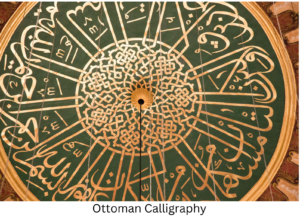
One of the most revered forms of Islamic calligraphy is the artistic representation of Qur’anic verses. Since the Qur’an is the literal word of Allah, writing it beautifully became an act of devotion.
Arabic calligraphy (khatt) began to emerge as a distinct, structured art form in the 7th century CE, driven by the need to record the Quran accurately and beautifully. Originating from Nabataean script (Aramaic roots) in the 4th century CE, it flourished alongside Islam, transforming from functional script into a sacred art form.
The Prophet Muhammad (ﷺ) emphasized the importance of beauty:
“Allah is Beautiful, He loves beauty.” (Riyad as-Salihin 611)
Calligraphy appears in mosques, manuscripts, and even everyday objects, reminding Muslims of their faith in daily life. The script developed from Nabataean, taking definitive shape around the 3rd or 4th century AD in the Arabian Peninsula. The revelation of the Quran (starting in 610 CE) sparked the need for a standardized, elevated, and beautiful script to preserve the text.
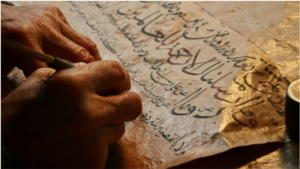
The first formal style was Kufic, known for its angular, geometric, and bold strokes. Initially, writing was simple. As the religion spread, calligraphy became a disciplined art requiring formal training, balancing precision with artistic elegance.
Islamic Geometric Patterns: Order in Design
Another defining feature is Islamic geometric patterns, known for their complexity and precision. These patterns are based on mathematical principles and often extend infinitely, symbolizing the boundless nature of Allah.
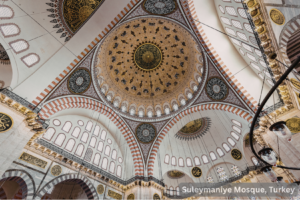
Visual Inspiration of Patterns
These patterns are not random; they reflect deep intellectual and spiritual thought. Scholars believe they represent the underlying order in Allah’s creation.
Mosque Architecture in Islam: Spaces of Spiritual Elevation
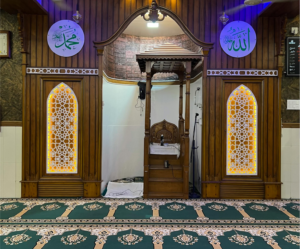
Mosque architecture is designed to enhance worship and create a sense of unity among believers. Every architectural element has a purpose.
Key Features
- Mihrab: Is a niche that indicates the direction of Makkah (Qibla)
- Minaret: Is a tall tower of the mosque used for the call to prayer
- Dome: Enhances acoustics and symbolizes the vault of heaven
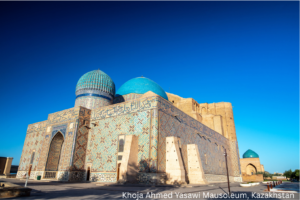
Spiritual Meaning of Mosque Design
The Spiritual meaning of mosque design lies in simplicity, openness, and humility. Mosques are not just buildings—they are spaces that bring people closer to Allah.
The Qur’an states:
“The mosques of Allah are only to be maintained by those who believe in Allah…” (Qur’an 9:18)
Visual Example of Mosque Architecture
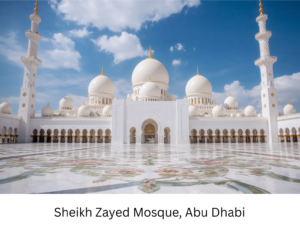
- Sheikh Zayed Grand Mosque
One of the largest and most stunning mosques globally, this masterpiece features white marble domes, intricate floral designs, and one of the world’s largest chandeliers. The reflective pools around it make it look magical, especially at sunset. It is located in Abu Dhabi.
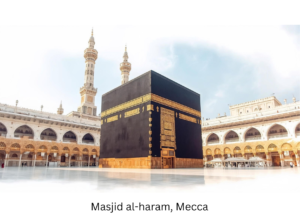
- Masjid al-Haram
The holiest mosque in Islam, surrounding the Kaaba (in Mecca). Its spiritual significance is unmatched, and its vast expansion accommodates millions of pilgrims during Hajj pilgrimage.
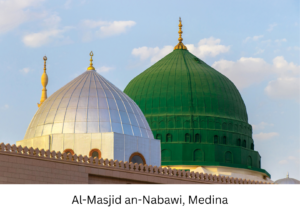
- Al-Masjid an-Nabawi
Known as the Prophet’s Mosque, it was built by Prophet Muhammad in Medina. Its iconic green dome and serene ambiance makes it one of the most peaceful and beautiful places in the world.
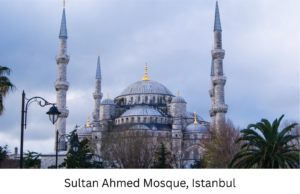
- Sultan Ahmed Mosque
Popularly called the Blue Mosque is in Istanbul, famous for its stunning blue Iznik tiles, six minarets, and grand domes. A perfect blend of Ottoman architecture and artistry.
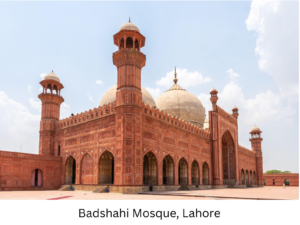
- Badshahi Mosque
A symbol of Mughal grandeur is in Lahore, built during the reign of Aurangzeb. Its red sandstone structure with marble domes gives it a majestic and timeless beauty.
History of Islamic Architecture: A Global Influence
The History of Islamic architecture spans continents and centuries—from the early mosques in Madinah to grand structures in Spain, Turkey, and India.
Famous examples include:
- Masjid al-Haram
- Alhambra
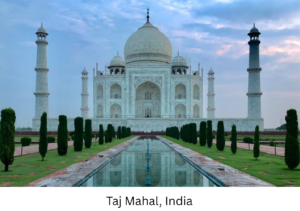
- Taj Mahal
These monuments reflect the diversity of Islamic cultural heritage, blending local styles of art with Islamic principles.
Islamic Cultural Heritage: Preserving Identity
Islamic cultural heritage is not limited to buildings—it includes manuscripts, textiles, ceramics, and more. These works preserve the identity and values of Muslim societies across generations.
A hadith highlights the importance of leaving beneficial knowledge and legacy:
The Messenger of Allah (ﷺ) said, “When a man dies, his deeds come to an end except for three things: Sadaqah Jariyah (ceaseless charity); a knowledge which is beneficial, or a virtuous descendant who prays for him (for the deceased).” [Riyad as-Salihin 1383]
Art and architecture serve as this beneficial knowledge, inspiring future generations. The building of mosques and madarsas are also categorised among the ceaseless charities.
Balance Between Faith and Creativity
A common misconception is that Islam discourages art. In reality, Islam guides creativity within ethical boundaries. The avoidance of idol worship led to the flourishing of non-figurative art forms like calligraphy and geometry. Islamic art encourages Aniconism, which is nothing but absence or prohibition of figurative, material representations or icons of divine beings, prophets, or venerated figures in art and worship.
This balance ensures that Islamic art and architecture remains spiritually meaningful rather than purely decorative.
Spiritual Significance in Islamic Architecture
Dr. Mostafa al-Badawi is a prominent Egyptian-born psychiatrist and a renowned author/translator of Islamic and Sufi literature. Based in Madinah, he is highly regarded for translating the works of Imam al-Haddad and for his own writings on Sufism and traditional Islamic sciences.
In a video, Dr. Mostafa Badawi discusses the spiritual significance inherent in Islamic architecture, arguing that buildings are designed to serve as reminders of Allah and paradise. He explains that through analogy and symbolism, physical structures and decorative motifs encourage meditation and spiritual awareness.
He continues pointing us some Key features in Islamic architecture:
- Symbolism in prayer items:
The arch on a prayer rug represents the mihrab (prayer niche), and adding a lamp suggests the “Verse of Light,” turning a simple object into a stimulus for meditation. - Arabesques and Nature:
Vegetal motifs in mosques are intentionally stylized rather than realistic; they represent the imagery of paradise, guiding the observer’s mind toward the divine. - The Experience of Entering a Mosque:
The transition from the outside world into the mosque is designed to foster a sense of insignificance before the presence of Allah. Large portals act as barriers, and the movement from dark tunnels into illuminated courtyards reflects a spiritual journey. - The Fountain as a Symbol of Paradise:
Dr. Badawi highlights the common design of fountains with eight pillars under a dome. He explains that the number eight refers to the gates of paradise or the carriers of the divine throne, while the dome represents the sky/throne, creating a physical manifestation of the promise of paradise
Conclusion
In essence, Islamic art and architecture is a reflection of faith, intellect, and beauty combined. It transforms spaces into reminders of Allah, turning everyday surroundings into sources of spiritual reflection.
From the elegance of Islamic calligraphy to the harmony of Islamic geometric patterns and the serenity of Mosque architecture in Islam, every element speaks of unity, purpose, and devotion. It is not just art—it is a visual expression of belief. Indeed a visual treat for Muslims and Non-muslims around the globe.
Why is calligraphy important in Islamic art?
Islamic calligraphy preserves and beautifies the Qur’an, making it a central artistic form.
What do geometric patterns symbolize?
Islamic geometric patterns symbolize infinity, order, and the perfection of Allah’s creation.
Why are mosques architecturally unique?
Mosque architecture in Islam is designed to enhance worship, unity, and spiritual focus.
Does Islam allow artistic expression?
Yes, Islam encourages creativity within ethical and spiritual boundaries.