ChatGPT
 Grok
Grok
 Perplexity AI
 Claude

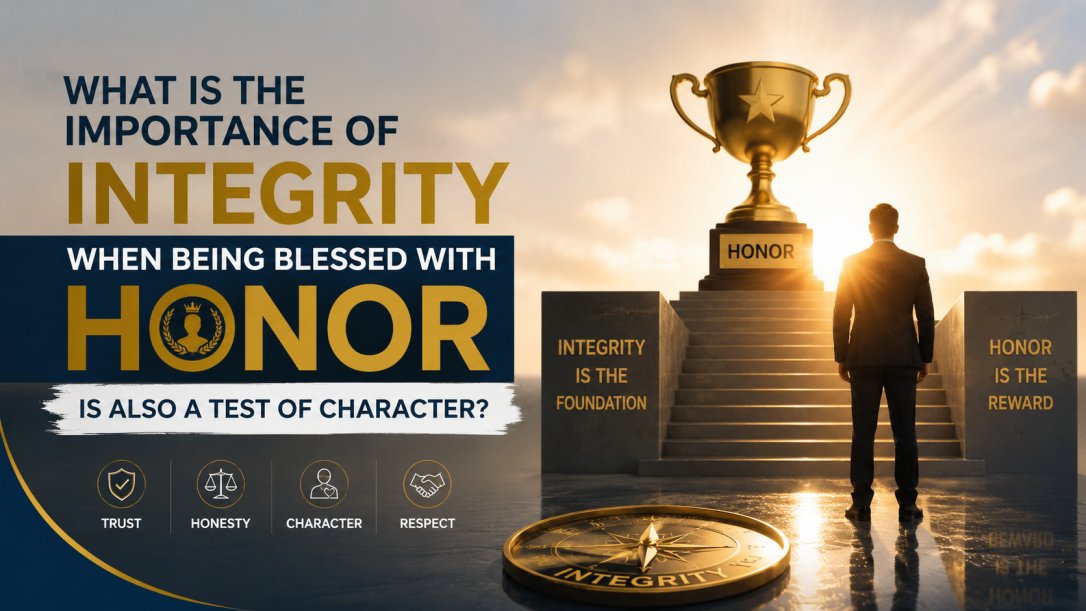
The importance of integrity lies in how a person handles honor, not just how they earn it. Recognition doesn’t build character, it reveals it. Integrity keeps a person humble in success, honest under pressure, and consistent whether anyone’s watching or not. True character shows up in both the honor and the hardship.
I still remember the day my mentor got the promotion everyone saw coming. The whole office clapped. He smiled, thanked people, and then quietly told me something I never forgot: “The award isn’t the hard part. Staying the same person after it is.” That’s really the whole idea behind the importance of integrity. It’s easy to talk about being honest and humble when nobody’s watching you. It’s a different story when suddenly, everyone is. Honor has a strange way of testing exactly the parts of us we thought were already settled. Recognition, titles, applause they don’t corrupt people overnight. They just turn up the volume on whatever was already there. If patience was thin before, it gets thinner. If humility was genuine, it usually holds. This blog digs into why that moment of being honored is actually one of the toughest exams a character ever takes, and how integrity is the only thing that gets you through it looking like yourself.
What Are the Qualities of a Good Leader When Honor Comes Knocking?
A good leader stays the same person after success as they were before it.
Not every leader handles a spotlight well. I’ve watched two very different reactions play out in real workplaces, and the difference always comes down to a handful of things.
- They give credit away instead of hoarding it. A good leader mentions the team before mentioning themselves.
- They ask more questions after winning than before. Success doesn’t make them stop learning.
- They keep the same tone with the intern as with the CEO.
- They treat the honor as a responsibility, not a trophy.
The qualities of a good leader don’t really change once the value of honor shows up they just get tested harder. Someone who was already grounded stays grounded. Someone who was faking it starts slipping, usually within weeks.
What Is the Real Importance of Integrity Once You’re Recognized?
Integrity matters more after recognition because there’s suddenly more to protect and more temptation to bend the truth.
Here’s the part people don’t expect: recognition doesn’t make honesty easier. It makes it harder. Suddenly there’s a reputation to protect, an image people expect you to live up to, and a quiet temptation to bend small truths just to keep looking as good as your title suggests.
This is exactly why integrity matters so much at this stage. Without it, honor turns into performance. A leader might start saying what sounds impressive instead of what’s actually true. They might avoid admitting mistakes because “someone in my position shouldn’t mess up.” That’s the trap. The importance of integrity isn’t about being flawless it’s about staying honest even when flawlessness is expected of you. People forgive mistakes. They rarely forgive being lied to about them.
How Do You Develop Moral Character Before Life Tests It?
You develop moral character through small, repeated honest choices made long before any big test arrives.
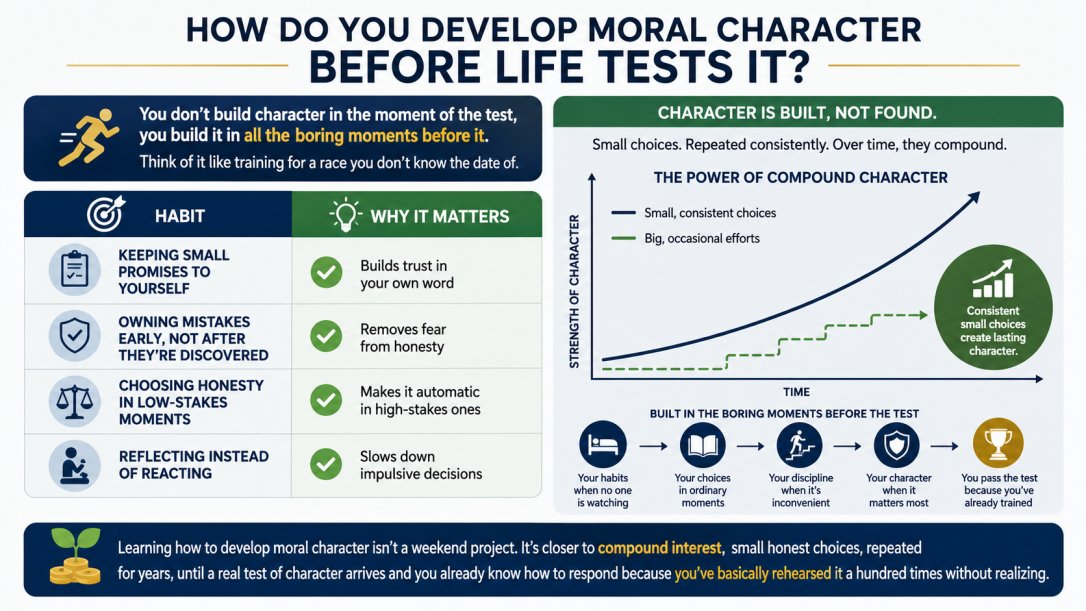
You don’t build character in the moment of the test, you build it in all the boring moments before it. Think of it like training for a race you don’t know the date of.
A few habits that actually help:
| Habit | Why It Matters |
| Keeping small promises to yourself | Builds trust in your own word |
| Owning mistakes early, not after they’re discovered | Removes fear from honesty |
| Choosing honesty in low-stakes moments | Makes it automatic in high-stakes ones |
| Reflecting instead of reacting | Slows down impulsive decisions |
Learning how to develop moral character isn’t a weekend project. It’s closer to compound interest, small honest choices, repeated for years, until a real test of character arrives and you already know how to respond because you’ve basically rehearsed it a hundred times without realizing.
How Do You Stay Humble When Everyone’s Praising You?
Stay humble by remembering the people who helped you and inviting honest feedback, even right after praise.
This is the one that trips people up the most. Praise feels almost too good and it’s tempting to start believing your own highlight reel.
A few things that genuinely help people stay grounded:
- Remembering the people who helped you get there (nobody does it alone)
- Asking for feedback right after being praised, not just before
- Keeping a friend or mentor who’s allowed to be blunt with you
- Reminding yourself that recognition is a moment, not an identity
The importance of humility isn’t about pretending you’re not good at what you do. It’s about not letting the compliments rewrite how you treat people. Someone who knows how to stay humble usually ends up more respected long-term than someone chasing constant validation.
How To Build Good Characters That Lasts Beyond the Applause?
Good character lasts when it keeps going after the recognition fades, not just while people are watching.
Applause fades fast usually by the next news cycle or the next team meeting. What stays behind is character, and that’s really the whole point of this conversation.
Building good character that outlasts a moment of honor looks like:
- Treating the honor as evidence of past effort, not future permission
- Continuing the same habits that earned the recognition in the first place
- Letting the achievement motivate more responsibility, not less accountability
- Checking in with yourself: “Would I still do this if no one noticed?”
That last question is basically the whole test. If the answer’s still yes, the character’s holding steady.
Why Does Honor Reveal the Importance of Integrity?
Receiving honor is something many people desire, but it also brings responsibility. When respect, success, or recognition comes, it can quietly change the way a person thinks. Some become humble and thankful, while others begin to rely on their own achievements. This is why the importance of integrity becomes clear. Integrity helps a person stay grounded, remember God’s blessings, and treat others with kindness instead of pride.
The Qur’an reminds us that both comfort and hardship can be forms of testing. Honor should not lead to arrogance, just as difficulties should not lead to hopelessness. A person with integrity understands that life’s circumstances may change, but faith, gratitude, and good character should remain constant. Real success is not measured by how much honor someone receives but by how faithfully they handle it.
| “As for man, when his Lord tries him by giving him honor and gifts, then he says [puffed up]: ‘My Lord has honored me.’ But when He tries him, by straightening his means of life, he says: ‘My Lord has humiliated me!’ Nay!…”
(Qur’an 89:15–17) |
Conclusion
Integrity matters most because it’s what makes honor mean something instead of just being a moment of applause. At the end of the day, honor was never really the finish line; it was the checkpoint that reveals who you already were becoming. The importance of integrity shows up loudest exactly when the world starts watching closest. It’s tempting to think being blessed with recognition is the reward, but it’s really the exam. Stay honest, stay humble, keep building the kind of character that doesn’t need an audience to hold its shape, and the honor becomes something earned twice, once for the achievement, and once for how you carried it afterward. That, more than any title or applause, is what people actually remember.
Does power always change a person's character?
Not exactly power tends to reveal character rather than create it. It simply removes the filters people use when they're being watched.
What's the difference between confidence and arrogance after success?
Confidence stays open to feedback, while arrogance stops listening altogether. The line usually shows up in how someone reacts to being questioned.
Why do some leaders lose respect right after a big promotion?
Often because the recognition changes their behavior overnight more ego, less accountability. People notice that shift faster than they notice the achievement itself.
Is humility a weakness in leadership roles?
Not at all humility usually earns more loyalty than authority ever does. Teams tend to work harder for leaders who stay approachable.
Can integrity be rebuilt after it's broken once?
It's possible, but it takes far longer to rebuild trust than it took to lose it. Consistent honest behavior over time is really the only way back.