ChatGPT
 Grok
Grok
 Perplexity AI
 Claude

Faith in the unseen is one of the important foundations of Islam. The role of angels in Islam is one of the six pillars of faith and teaches Muslims that angels are creations of Allah who carry out specific responsibilities and exist within the Islamic spiritual realm. Muslims believe that angels are not divine beings but honored servants of Allah who obey His commands completely.
Understanding the belief in angels Islam helps us appreciate that angels are part of Allah’s creation, created from light, unlike humans who were created from clay and jinn who were created from fire. Their existence reflects the greatness of Allah’s creation and reminds believers that the universe contains realities beyond human perception.
The Nature of Angels in Islam
According to Islamic teachings, Angels are Allah’s creation. Muslims believe in angels. Angels are made of divine light (Noor). We cannot see them, but they can see us.Angels are created to glorify, worship and serve Allah. They do not eat or drink. They neither have families nor they have children. They are neither male nor female.
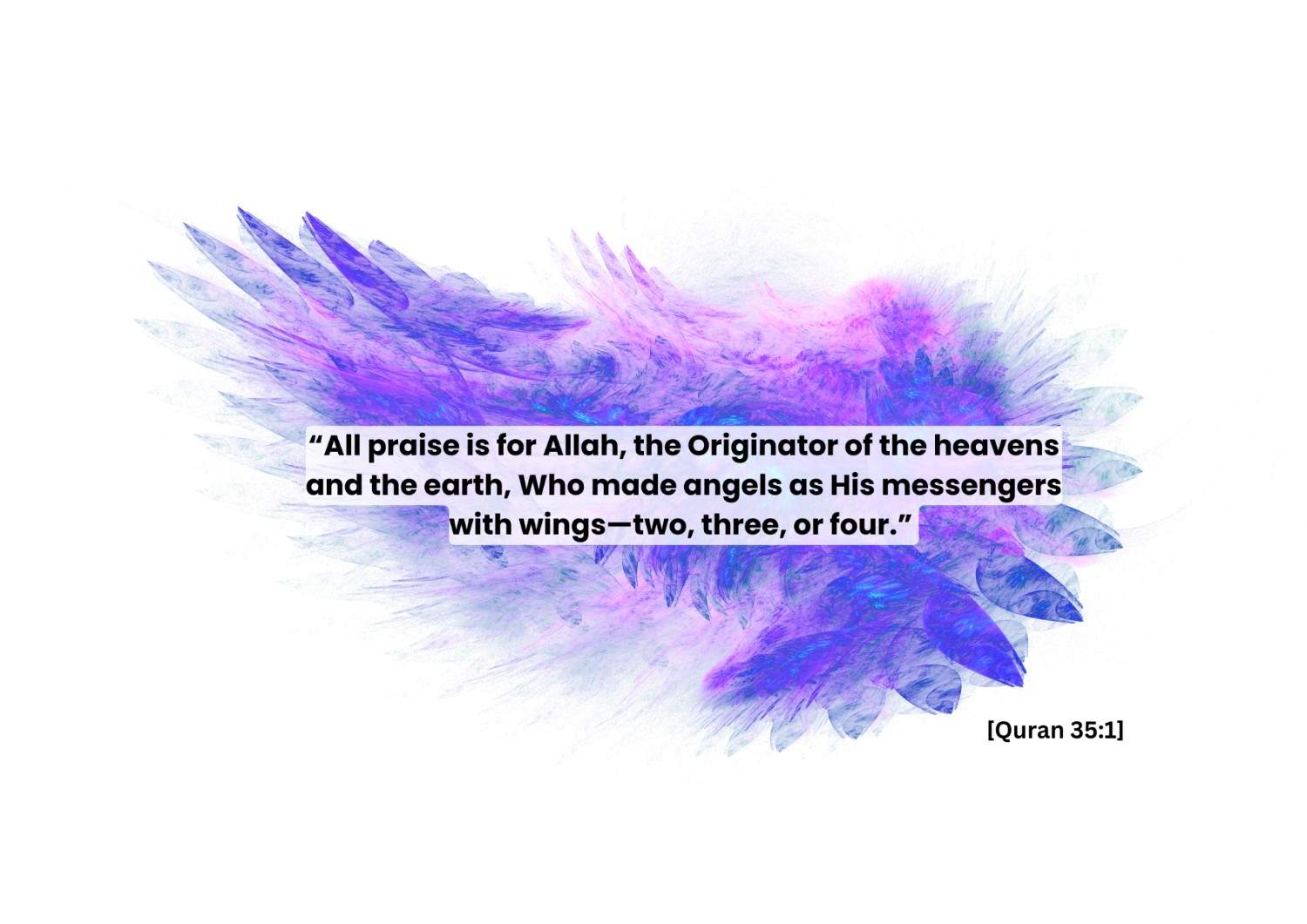
Angels were created long before the creation of Adam. They have wings two, three or four. No one knows exactly what they look like. They may take different shapes and forms. No one knows the exact number of angels.
This understanding forms an important part of Muslim spiritual beings and the wider Islamic supernatural beliefs.
The Quran mentions:
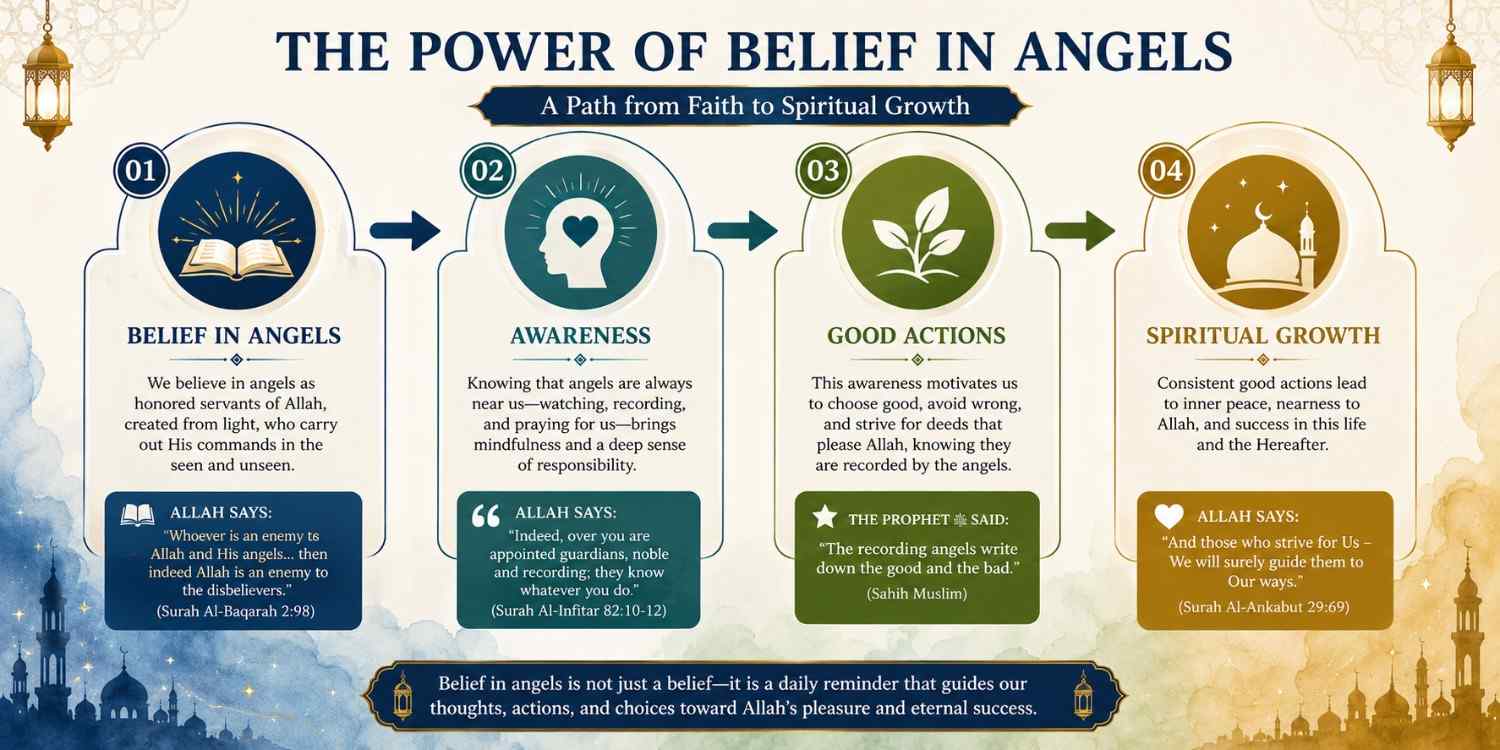
“Whoever is an enemy of Allah, His angels, His messengers, Gabriel, and Michael, then let them know that Allah is certainly the enemy of the disbelievers. ”
[Quran 2:98]
This verse highlights the importance of believing in angels alongside belief in Allah and His messengers.
Duties of Angels in Islam
Islamic sources mention several angels with specific responsibilities. Understanding the duties of angels in Islam teaches believers about the organized nature of Allah’s creation.
Angel Jibril in Islam – The Messenger of Revelation
One of the most honoured angels is Jibril. Angel Jibril in Islam is especially significant because he brought Allah’s Wahi (message) to the Prophets, including the Quran to Prophet Muhammad ﷺ. The duty of Angel Jibril was to faithfully deliver Allah’s message without altering it in any way. The Prophet ﷺ saw Angel Jibril many times. Some of the Sahabah saw Jibril when he once came in the form of a human being.
Allah says:
“This is certainly a revelation from the Lord of all worlds, which the trustworthy spirit Gabriel brought down into your heart ˹O Prophet˺—so that you may be one of the warners.”
[Quran 26:192–194]
Islamic scholars explain that “the Trustworthy Spirit” refers to Angel Jibril.
Other Angels and Their Roles
Islamic teachings describe angels with different responsibilities:
- Izra’il, the angel of death.
Comes to people before their death and takes their souls out of their bodies. He gives the believers the good news of Jannah. - Angel Israfil, with the help of Allah will blow As-Sur.
As-Sur is the trumpet which has a very loud sound. The noise of As-Sur will wake up the dead people, and gather them in the presence of Allah for judgement. - Angel Mika’il, was created by Allah to arrange for the rainfall.
- Two angels named Munkir and Nakir will report on us and question us (the dead) in the grave. They will ask about the religion, our Prophet, and our Book. Though we cannot see them, our Prophet saw the Angels when the angels brought Allah’s message to them.
- Two Angels, Kiraman Katibin, sit on our right and left shoulders,
writing down all our good and bad deeds, respectively. On the day of judgement all our actions will be presented before Allah.
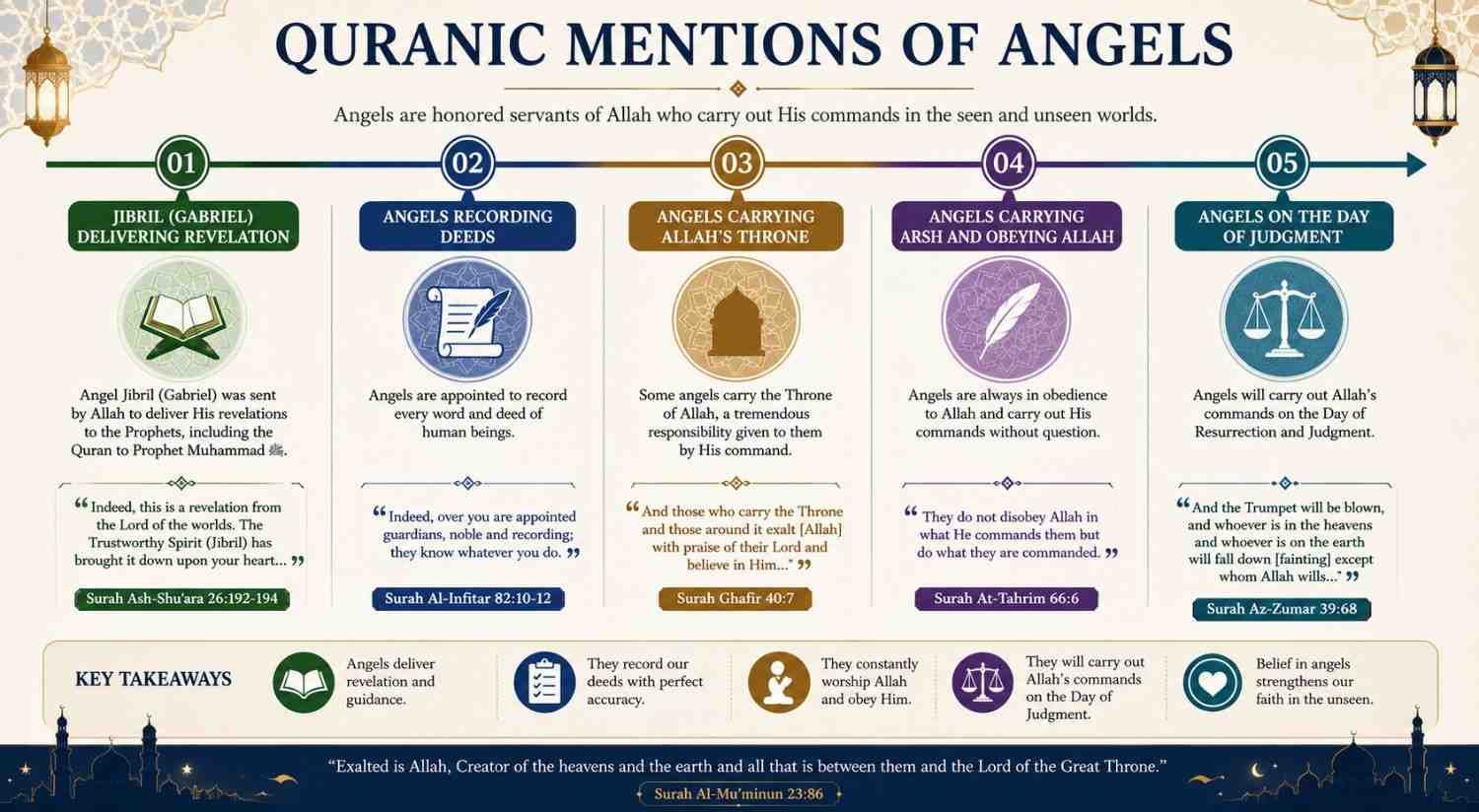
One of the important duties of angels in Islam is recording every person’s deeds. The Quran says:
“while you are certainly observed by vigilant, honourable angels, recording ˹everything˺. They know whatever you do.”
[Quran 82:10–12]
These teachings show how angels are connected to human life, accountability, and the afterlife.
Angels and the Invisible World
The belief in angels teaches Muslims that reality is greater than what can be seen. The concept of Muslim belief invisible reflects the Islamic understanding that many creations of Allah remain hidden from human senses.
The Islamic cosmology angels represent a connection between the physical world and the unseen creation of Allah. Angels are part of a larger system where every creation has a purpose.
This verse further strengthens the belief in angels Islam by mentioning belief in angels alongside belief in Allah, His Books and His Messengers:
“The Messenger firmly believes in what has been revealed to him from his Lord, and so do the believers. They all believe in Allah, His angels, His Books, and His messengers.”
[Quran 2:285]
This hadith provides insight into the nature of angels and their unique creation.
Lessons from Muslim Angel Stories
Throughout Islamic history, many Muslim angel stories describe moments when angels supported prophets and believers by Allah’s permission. During important events, angels appeared as helpers, messengers, or witnesses to Allah’s commands.
For example, during the Battle of Badr, the Quran mentions that Allah supported the believers with angels:
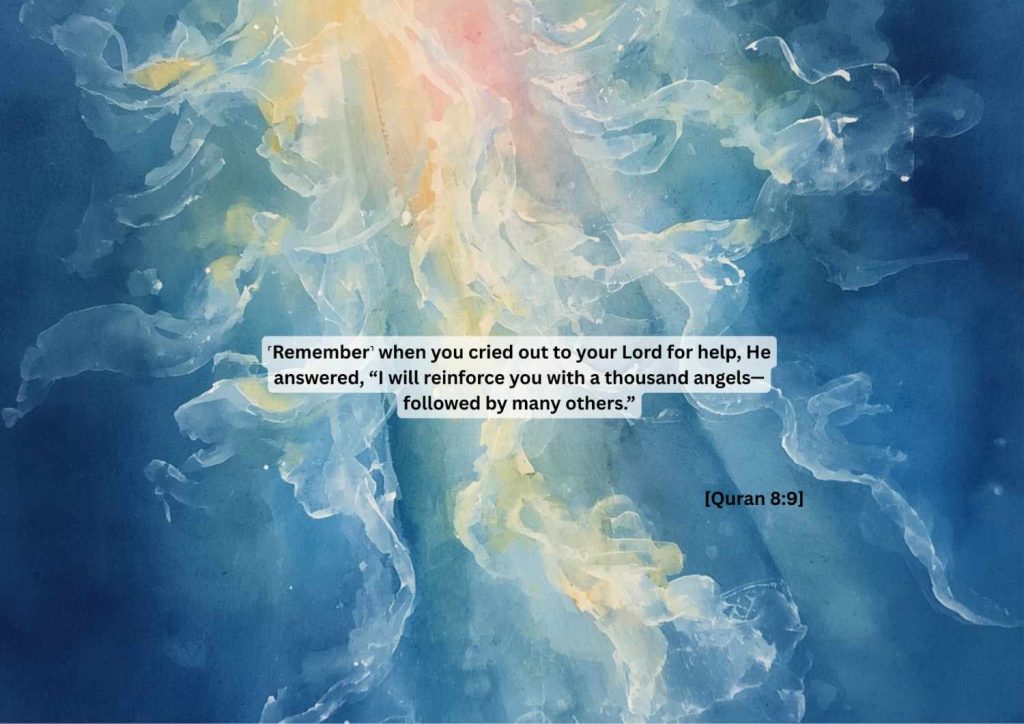
“Remember when you cried out to your Lord for help, He answered, “I will reinforce you with a thousand angels—followed by many others.”
[Quran 8:9]
These accounts are not only historical events but also reminders of Allah’s power and mercy.
Why Belief in Angels Matters
Belief in angels encourages Muslims to develop awareness, humility, and responsibility. Knowing that deeds are recorded motivates believers to act with kindness and sincerity. Understanding the role of angels in Islam encourages Muslims to become more conscious of Allah in their daily lives.
The Angels or the Mala’ikah do whatever Allah asks them to do. They do not disobey Allah. They praise and glorify Allah and serve Him all the time. They always do thor duty as they are told. They cannot say “No” to any of Allah’s commands. Angels are always busy doing their jobs all the time. Some angels protect and help people. Some of them are in charge of Janah, the Paradise. Other angels are in charge of Jahannam, the hell.
The verses on how are angels described in the Quran show that angels are repeatedly mentioned as obedient servants of Allah. Moreover these angels described in the Quran remind believers about obedience, accountability and Allah’s wisdom.
Conclusion
The role of angels in Islam goes beyond simply believing in unseen beings. Angels represent obedience, purity, and the perfect order of Allah’s creation.
At one point of time, that only Allah knows, everything will come to an end. Only Allah will remain. He will bring all of us to life all over again. Angels are not partners of Allah but are Allah’s creation and His servants.
The belief in angels teaches Muslims that the universe includes many creations beyond human knowledge and that every part of creation follows Allah’s command.
Understanding angels helps believers strengthen their faith and appreciate the depth of Islamic teachings about the seen and unseen worlds.
Who is Jibril in Islam?
Jibril (Gabriel) is the angel who delivered Allah’s revelations to prophets, including the Quran to Prophet Muhammad ﷺ.
Are angels visible to humans in Islam?
No, Angels belong to the unseen world. Muslims believe they exist even though humans normally cannot see them.
What are the duties of angels in Islam?
Angels have different responsibilities, including delivering revelation, recording deeds, and carrying out Allah’s commands like causing the clouds to pour, etc.
Why is belief in angels important?
Belief in angels strengthens faith in the unseen and reminds Muslims about accountability and Allah’s greatness.