ChatGPT
 Grok
Grok
 Perplexity AI
 Claude

In every stage of life, people search for comfort, hope, and guidance. Islam teaches believers that one of the strongest connections between a person and Allah is through dua in Islam. Whether someone is facing hardship, seeking forgiveness, or expressing gratitude, du’a becomes a direct conversation with the Creator.
Unlike ordinary speech, du’a carries sincerity, humility, and trust. It is not limited to scholars or religious leaders; every believer can raise their hands and speak to Allah in their own words.
Supplication in Islam
Supplication in Islam holds such a powerful place in the daily life of a Muslim.
Allah says in the Quran:
“Call upon Me, I will respond to you. Surely those who are too proud to worship Me will enter Hell, fully humbled.”
[Quran 40:60]
This verse beautifully highlights the mercy of Allah and encourages believers never to lose hope.
How To Make Dua
Mufti Ismail Menk gives us some advice on how to make dua that is accepted by Allah, Insha Allah. In his lectures he gives us some tips on this. When starting a Dua two things are important to start it with: To begin we need to praise Allah SWT and following that we should send some blessings and salutations to the Prophet Muhammed (ﷺ) because Allah chose him above all of us. Then we must seek His forgiveness firstly.
The steps are like:
- Praise Allah
- Send blessings and salutations on the Prophet
- Seek forgiveness
- Then we ask Allah what we need, what we want. Once we are done with Dua we send blessings on the prophet (ﷺ) again, then close it with Allah, the Almighty’s praise just the way we started the Dua we end it likewise.
These are some of the etiquettes of Dua.
Mufti Menk further adds that there are many books of Dua. We may use those books to make Dua. Some people are like I don’t need a book, I can make dua on my own. Do we know it is blessed to use the exact words that the messengers (ﷺ) used, that are mentioned in the Quran and the Sunnah of the Prophets (ﷺ).
If simply explained, there is a door over there which has a key to open it, if i give you a bag with a whole bunch of keys and tell you to try this particular one but you start trying all other keys from that bag. If you had chosen the key that I gave you and easily opened the door but you didn’t. Same way it’s better to use those words of our messengers which are already given to us.
Allah didn’t force us to use those words but it is highly recommended. So, if you use the same words that Prophet Musa (ﷺ) used, Prophet Muhammed (ﷺ) used every morning, evening and night it is more blessed thaan coming up with your own terminology. Although it’s permissible to come up with your own words.
The Etiquette of dua includes:
- Beginning with praise of Allah.
- Sending blessings upon Prophet Muhammad ﷺ.
- Facing the Qiblah if possible.
- Raising the hands with humility.
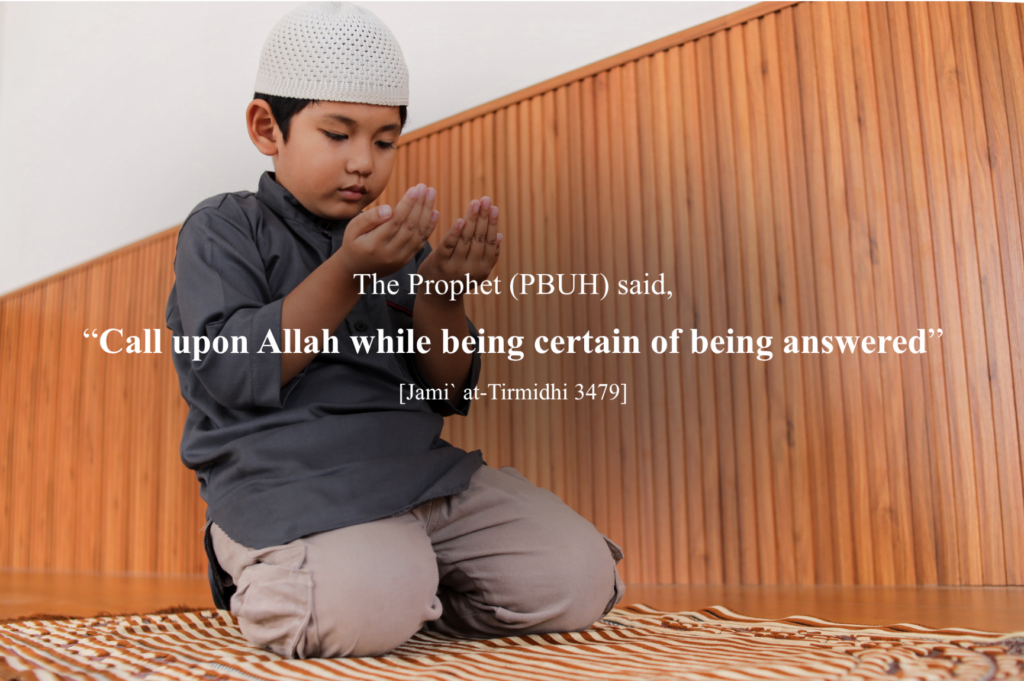
- Having complete sincerity and certainty in Allah.
- Asking with patience and avoiding haste.
The Importance of dua in Islam
The Importance of dua can be understood from the teachings of the Prophet Muhammad ﷺ. Du’a is considered an act of worship because it reflects dependence upon Allah alone.
The Prophet ﷺ said:
“ Supplication (du’a’) is itself the worship. ”
[Sunan Abu Dawood 1479]
Through dua in Islam, believers strengthen their faith and develop patience. Even when prayers are not answered immediately, believers trust that Allah responds in the best possible way and at the best time.
Du’a also provides emotional peace. During sadness, anxiety, or confusion, turning to Allah gives the heart comfort that no worldly solution can fully provide.
Best Times For Dua
Dr.Omar Suleiman (Islamic Scholar and Author) says, everyone is always looking for a time when Dua is accepted. A time of accepted Dua is five times a day. Just like how we believe our dua are accepted at a specific time of Jummah, just as when it rains and just as you have when you travel.
The Messenger of Allah (ﷺ) said:
“The supplication is not rejected between the Adhan and the Iqamah.” They said: “So what should we say, O Messenger of Allah (ﷺ)?” He said: “Ask Allah for Al-`Afiyah in the world and in the Hereafter.”
[Jami` at-Tirmidhi 3594]
We have this moment five times a day as long as we want it to be. Some people take advantage of even the 30 seconds between the Adhan and Iqamah. Some people take advantage of the 10 or 15 minutes depending on the situation.
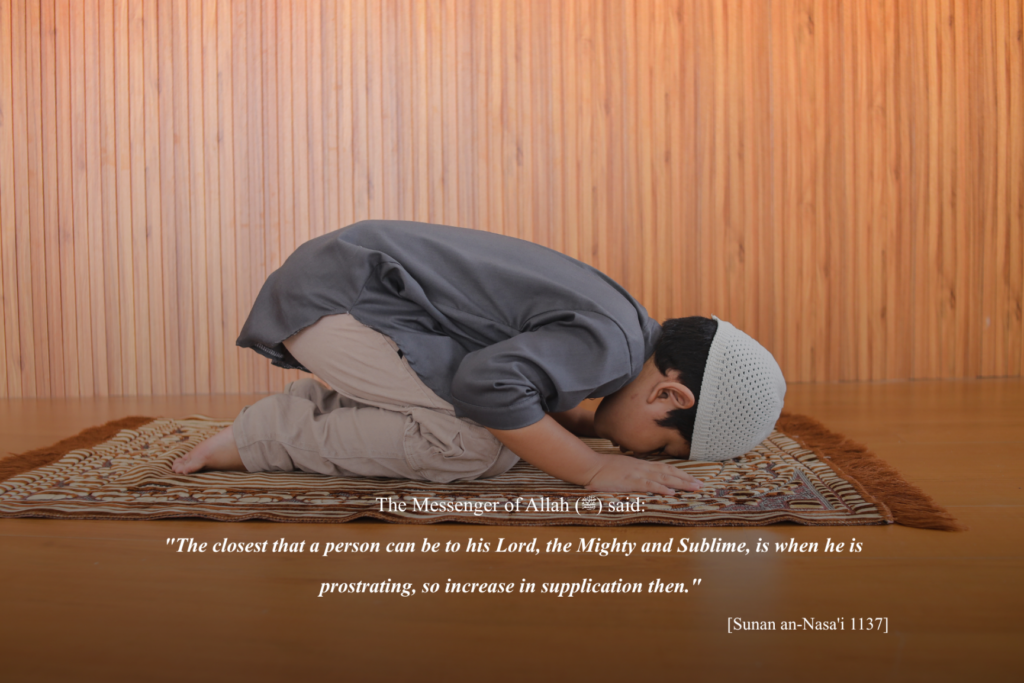
There are certain times better than the other times to make Dua. Get up at night when the world is asleep and cry at the time of Tahajjud (at the last third part of the night), cry and ask Allah at that time because at that time Allah descends to the lowest of heavens.
Allah’s Messenger (ﷺ) said:
Allah waits till when one-third of the first part of the night is over; He descends to the lowest heaven and says: Is there any supplicator of forgiveness? Is there any penitent? Is there any petitioner (for mercy and favour)? Is there any solicitor? -till it is daybreak.
[Sahih Muslim 758e]
A list of few moments when your prayers are accepted, according to Hadith and Quran:
- Last 1/3rd of the night (i.e., Tahajjud)
- At night
- In Sujood
- Between Adhan and Iqamah
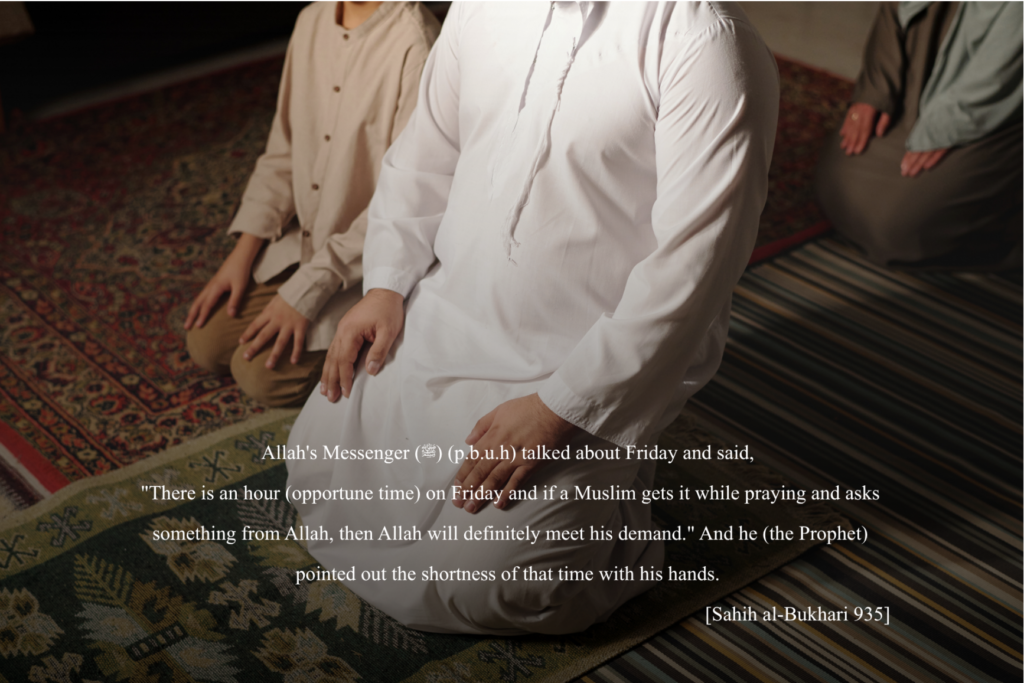
- During Friday
- Night before friday
- Specific time between Asar and Maghrib on Friday
- When it rains
- When you are travelling
- While fasting (at the time of suhoor and before Iftar)
- While doing good deeds (like while giving Sadaqah, removing obstacles from the road, etc)
- After every Fardh salah
- While travelling
Power of dua in Islam
The Power of dua in Islam is repeatedly mentioned in Islamic history and prophetic teachings. Many prophets turned to Allah through sincere supplication during difficult moments.
For example, Prophet Yunus (ﷺ) made du’a while trapped inside the belly of the whale:
“And remember when the Man of the Whale stormed off from his city in a rage, thinking We would not restrain him. Then in the veils of darkness he cried out, “There is no god worthy of worship except You. Glory be to You! I have certainly done wrong.” ”
(Quran 21:87)
Allah accepted his supplication and rescued him from hardship.
Similarly, Prophet Zakariyya (ﷺ) prayed for a child despite old age, and Allah blessed him with Yahya (ﷺ).
These examples show that nothing is impossible when sincere du’a is made with faith and patience.
Dua examples from Quran and Sunnah
The Quran and Hadith contain many beautiful supplications that Muslims can recite daily.
Dua examples from Quran
Some of the most powerful Dua from Quran are,
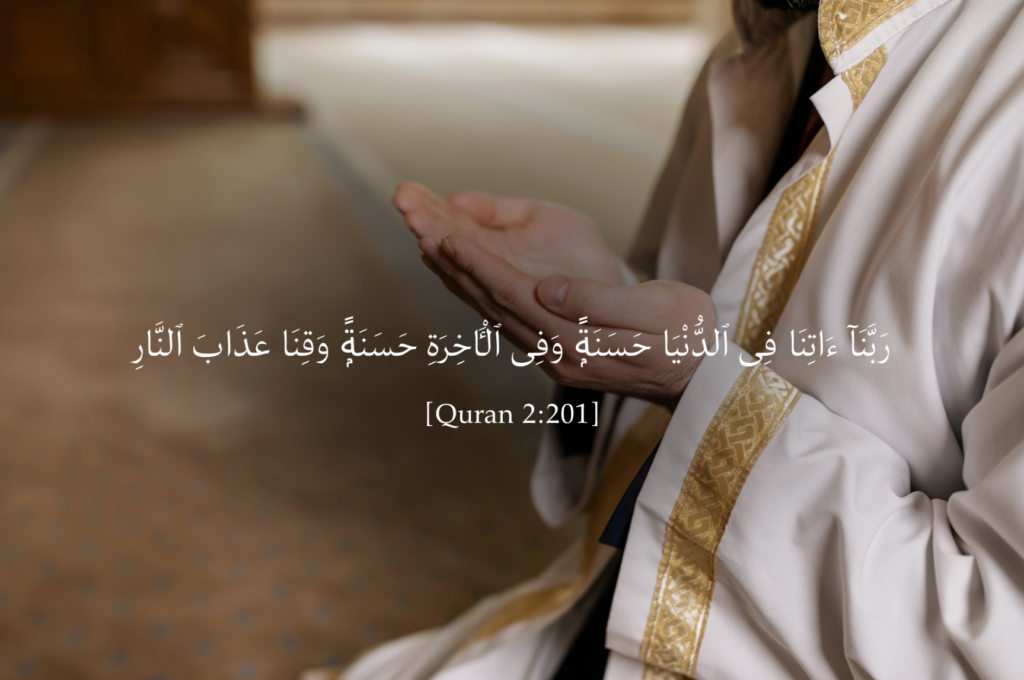
“Our Lord! Grant us the good of this world and the Hereafter, and protect us from the torment of the Fire.” [Quran 2:201]
“My Lord! I am truly in desperate need of whatever provision You may have in store for me.” [Quran 28:24]
“My Lord! Increase me in knowledge.” [Quran 20:114]
Sheikh Belal Assaad, a globally renowned Australian Islamic scholar, educator says, after praising Allah and sending peace and blessings on Muhammed (ﷺ) ask Allah by invoking Him with His names. Like Ar-Rahman when you seek his mercy, Al-Ghaffar when you seek his forgiveness, Ar-Razzaq when you want something from Allah. It is best to use Prophets (ﷺ) dua if we know them or we may ask it in the way we understand.
Duas from Hadith
Many authentic Duas from Hadith were taught directly by Prophet Muhammad (ﷺ).
Some of the commonly recited supplications are:
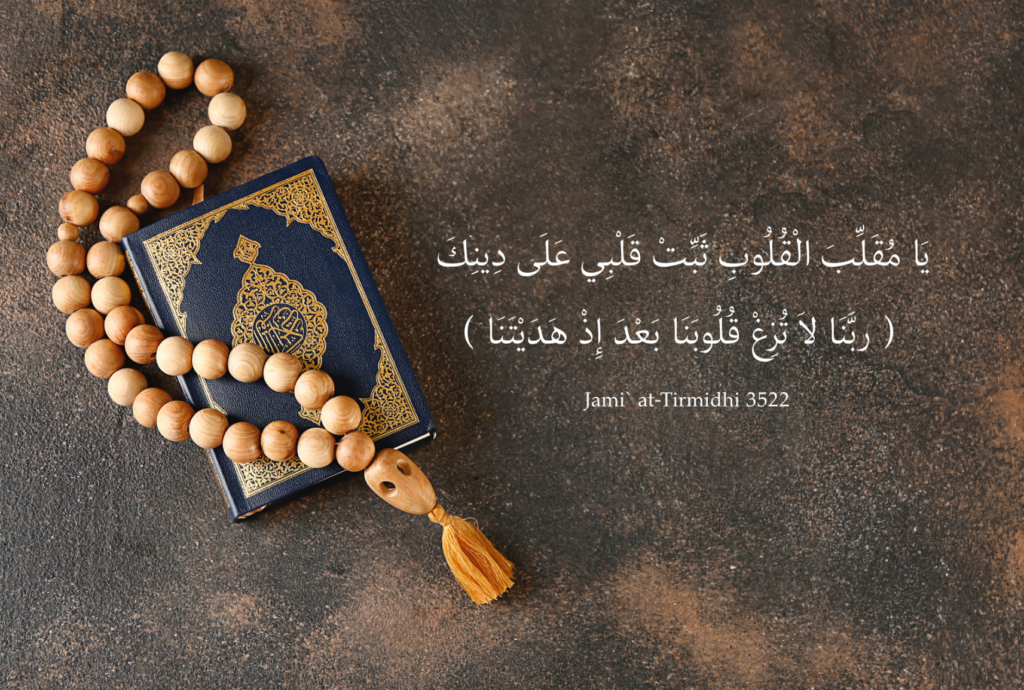
“O Changer of the hearts, make my heart firm upon Your religion.”
[Jami` at-Tirmidhi 3522]
“O Allah, You are Forgiving and love forgiveness, so forgive me ”
[Sunan Ibn Majah 3850]
“O Allah, I seek refuge in you from the withdrawal of your blessing and the change of your protection (from me) and from the sudden wrath of yours, and from every displeasure of yours.”
[Sahih Muslim 2739]
These prophetic supplications teach humility, hope, and reliance upon Allah.
Conclusion
The beauty of dua in Islam lies in its simplicity and sincerity. A believer does not need a special language or place to speak with Allah. Every whispered prayer, every tear, and every sincere request is heard by the Creator.
The importance of supplication goes beyond asking for worldly needs. It builds faith, strengthens patience, and reminds believers that Allah is always near.
By learning the Etiquette of dua, understanding the Power of dua, and practicing authentic supplications from the Quran and Sunnah, Muslims can develop a stronger spiritual connection with Allah in every stage of life.
Can dua change destiny?
Islam teaches that sincere du’a can influence outcomes by the permission and wisdom of Allah.
What are the best times for dua?
Some of the best times for dua include Tahajjud, during fasting, while in sujood, and between Adhan and Iqamah.
Is it necessary to recite Arabic while making dua?
No. Muslims can make du’a in any language sincerely from the heart.
Why is supplication important in Islam?
Supplication in Islam strengthens faith, brings peace, and reminds believers to rely on Allah alone.