ChatGPT
 Grok
Grok
 Perplexity AI
 Claude

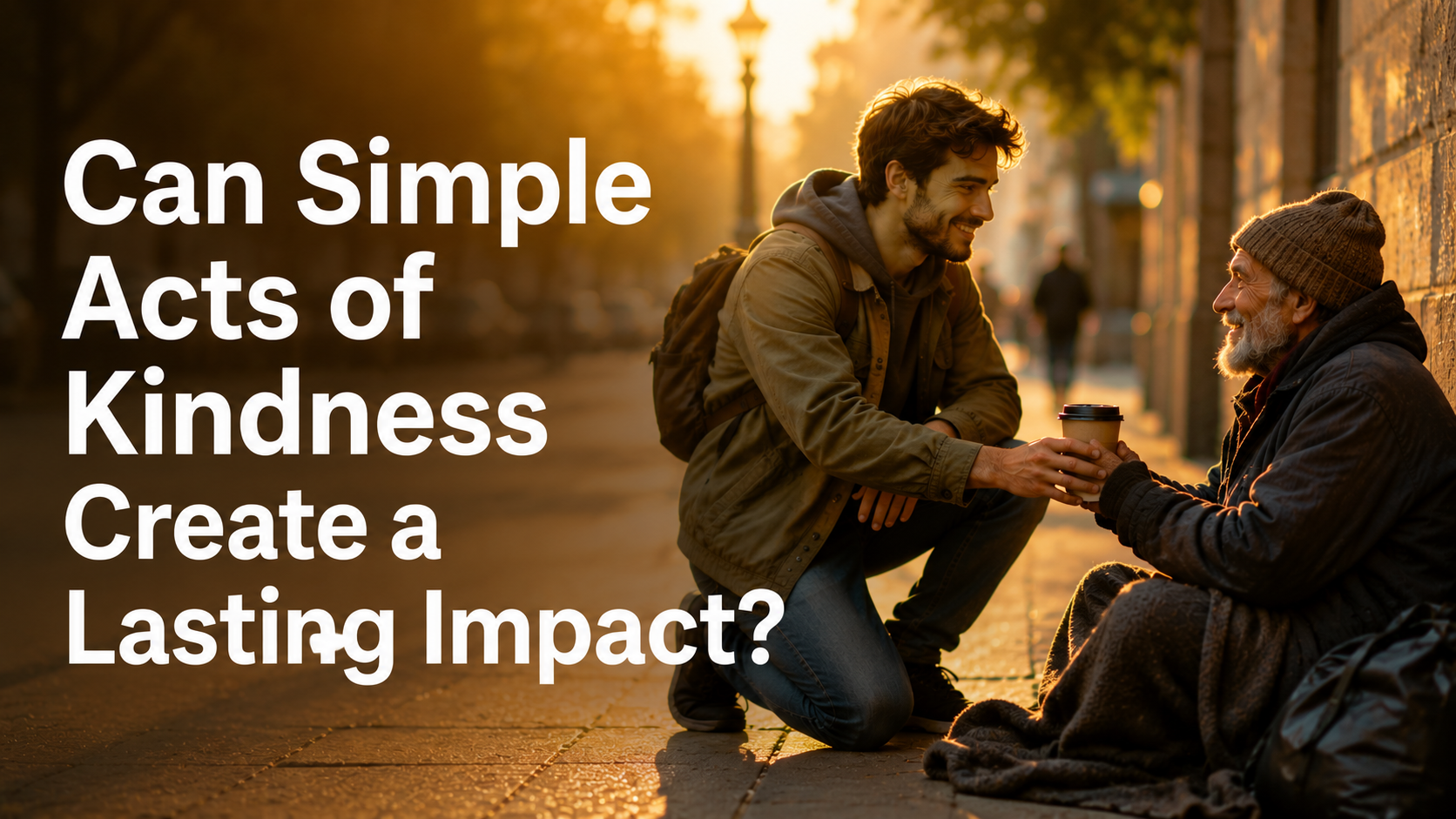
My uncle used to say: throw a pebble in water and walk away. The ripples don’t need you watching them to keep going.I think about that a lot. Especially on days when the news feels heavy, when generosity seems like something only billionaires practice, and when helping people in need feels like a drop in an overwhelming ocean.
But here’s what I’ve come to believe and what the evidence actually backs up: small acts of kindness don’t just help the person in front of you. They travel. They echo. And sometimes, they change entire trajectories.
What Makes Charitable Giving Feel So Personal Even When It’s Small?
Most conversations about charitable giving go straight to money. How much did you donate? Which charity did you pick? Is it tax-deductible?And look, financial support matters. It genuinely does. But if we only talk about charity in pounds and pence, we miss most of what it actually is.
Think about the last time someone did something kind for you not because they had to, but just because they noticed you needed it.
Maybe it was a colleague who covered for you on a hard day. A neighbour who dropped off food when you were unwell. A stranger who just. waited. Held the lift. Smiled when you were clearly not okay.That’s charitable giving in its most honest form. It’s attention. Presence. The decision to treat someone’s difficulty as worth your time.
The benefits of charity work both ways, and that’s not a cliche it’s actually documented.
People who give regularly, in whatever form, tend to report:
- Lower anxiety and stress levels over time
- A stronger sense of daily purpose
- More meaningful relationships
- A general feeling that their life adds up to something
Which, if you ask me, is a pretty compelling reason to start regardless of whether you have much to give.
Why Is Charity Important Even When Problems Feel Too Big to Solve?
This is the question that stops a lot of people cold. The world has enormous problems. Poverty. Displacement. Hunger. Mental health crises. Climate collapse. And you one person are supposed to do what, exactly? Buy someone a sandwich and call it a day?Here’s the thing about the importance of charity that often gets lost: it was never about solving everything. It’s about refusing to do nothing.
When you understand why charity is important and how charity helps society not as a grand gesture but as a consistent habit, it starts to feel less overwhelming. You’re not trying to fix the whole system on a Tuesday afternoon. You’re making one specific thing slightly better for one specific person. That’s it. That’s enough.And the collective weight of that millions of people making one thing slightly better is how societies actually shift. Slowly, but unmistakably.
The importance of charity to how communities function includes:
- Keeping vulnerable people from falling through institutional cracks
- Normalising generosity and kindness as everyday behaviour, not exceptional heroism
- Creating informal safety nets that no government programme can fully replicate
- Giving people dignity in moments when systems have failed them
None of that is nothing. That’s actually everything.
How Does Helping People in Need End Up Helping You Too?
I’ll be honest when I first came across research on the benefits of helping others, I was a bit skeptical. It sounded like the kind of thing people say to make volunteering seem more appealing. “It’s good for you too!” Sure.
But the data is genuinely interesting. Helping people in need consistently, in whatever small way you can manage has been tied to reduced cortisol levels, better sleep, stronger immune response, and lower rates of depression. Not because charity is magic. But because turning your attention outward, even briefly, interrupts the loop of self-focused worry that wears most of us down.
The psychological benefits of helping others aren’t complicated to understand:
- It gives you perspective on your own problems without dismissing them
- It connects you to other people in a way that scrolling never will
- It builds a quiet kind of self-respect that’s hard to manufacture any other way
- It makes you feel like part of something a community, a shared effort, a story bigger than your own
Generosity and kindness, practised regularly, change who you are. Not overnight. But over time, they do.
Here’s a simple breakdown of the different forms this can take and what each one actually sets in motion:
| Type of Deed | Real-Life Example | What It Can Lead To |
| Giving Time | Sitting with an elderly neighbour once a week | They feel seen loneliness drops, health improves |
| Charitable Giving | Donating to a local food drive | One family eats; they stay stable; kids stay in school |
| Sharing Skills | Teaching a friend to write a CV | They get a job, gain confidence, help someone else next |
| Emotional Support | Checking in on a grieving friend | They don’t spiral one message can change everything |
| Random Kindness | Paying for a stranger’s coffee | They pass it on generosity and kindness spread organically |
Can the Power of Generosity Reshape an Entire Community’s Culture?
Short answer: yes, and we have enough real examples to stop treating this as idealism.
The power of generosity doesn’t announce itself. It works quietly, over time, in the background of everyday life. A neighbourhood where people genuinely look out for each other is not a coincidence, it’s the accumulated result of hundreds of small decisions to show up.
Deeds of charity when they become habitual rather than occasional create something that money alone can’t buy: trust. And communities with high trust levels are measurably safer, healthier, and more economically stable than those without it.
Some of the most powerful examples of this aren’t dramatic. They’re ordinary:
- A local WhatsApp group where people share spare food, tools, and time no money changes hands
- A teacher who stays late once a week to help struggling students changes how those kids see themselves for decades
- A woman who starts visiting care homes on weekends inspires three friends to do the same
- The impact of charity at street level often looks like this: unremarkable, unnoticed, and absolutely irreplaceable
The power of generosity is that it compounds. Every act makes the next one more likely in you, and in the people who witness it.
Does the Scale of Your Deed Actually Determine the Impact of Charity?
No. And I think this misconception does more damage than people realise.We’ve built a culture around grand gestures. The viral donation. The celebrity fundraiser. The multi-million pound campaign. And those things matter, I’m not dismissing them. But the quiet worship of scale has a side effect: it makes ordinary people feel like their smaller contributions don’t count.
They do. The impact of charity is almost never proportional to the size of the act at the moment. It’s proportional to timing, sincerity, and consistency.A text sent to a friend at 11pm when they’re spiraling. A tenant dropped into a local food bank collection on the way out of a supermarket. Sitting with someone who just got bad news, saying nothing, just being there. These are deeds of charity. They are not lesser versions of the real thing. They are the real thing.
What actually makes generosity and kindness powerful isn’t the headline number. It’s a habit. The person who gives a little, regularly, sincerely, over years they change far more than the person who makes one large gesture and moves on.
The impact of charity grows in repetition. In the relationship. In the fact that someone, somewhere, knows you haven’t forgotten them.
Does Glorifying God Actually Change What Happens to Us in Our Darkest Moments?
The story of Yunus (AS) is proof that remembrance of Allah is not just worship, it is rescue. When he was swallowed by the whale, alone in layers of darkness, what saved him wasn’t strength or strategy. It was tasbih. It was the habit of glorifying Allah that he had built long before the crisis hit. That’s the lesson most people miss: you don’t build that connection when you’re desperate. You build it in the ordinary, quiet moments, so it carries you when everything falls apart.
| “Had he not been of them who glorify, He would have indeed remained inside its belly [the fish] till the Day of Resurrection.” (Qur’an 37: 143-144) |
Conclusion
No. There really isn’t. I know that sounds like something you’d stitch onto a cushion, but it’s true.
Most of us are waiting for the right conditions. Enough money. Enough time. Enough certainty that what we do will actually matter. But those conditions rarely arrive perfectly. And while we wait, people who need something small from us go without it.Acts of kindness don’t require a plan. They require attention. The willingness to notice what someone around you is carrying and decide even for five minutes to help carry it.
So here’s where we land after all of this:
Charitable giving, at any level, is a relationship not a transaction. The importance of charity isn’t about solving everything; it’s about refusing to look away. Helping people in need does something to the helper too; it makes life feel more worth living. The benefits of helping others are real, documented, and available to anyone willing to start. Generosity and kindness, repeated over time, change communities in ways that policy and money alone cannot. The power of generosity multiplies when it becomes a habit rather than an event. And the impact of charity whether measured in one person’s changed afternoon or a community’s shifted culture is almost always larger than it looks from the outside.
What if my charitable giving is just a few rupees does it even matter?
It does, honestly. A few rupees to you might be a meal for someone who hasn't eaten since yesterday. Size never defines impact.
Does helping people in need actually make a real difference when problems are so massive?
One person can't fix everything, sure but you can fix something for someone today, and that's genuinely not small.
How is generosity and kindness different from just being polite to people?
Politeness is surface level generosity and kindness is when you actually inconvenience yourself a little for someone else's sake, and do it anyway.
Why does the power of generosity feel so underrated in today's world?
Because loud, dramatic things grab attention quietly, consistent kindness just gets on with changing lives without needing anyone to notice.